Rabu, 24 April 2013

A Filha do Fazendeiro (Portuguese Edition), by Little Dickins

A Filha do Fazendeiro (Portuguese Edition), by Little Dickins

Now, exactly how do you recognize where to acquire this e-book A Filha Do Fazendeiro (Portuguese Edition), By Little Dickins Don't bother, now you might not go to guide shop under the bright sun or evening to search the publication A Filha Do Fazendeiro (Portuguese Edition), By Little Dickins We here constantly assist you to discover hundreds sort of book. One of them is this book entitled A Filha Do Fazendeiro (Portuguese Edition), By Little Dickins You might go to the link web page provided in this set then opt for downloading and install. It will not take more times. Simply link to your net accessibility and you could access guide A Filha Do Fazendeiro (Portuguese Edition), By Little Dickins on the internet. Obviously, after downloading A Filha Do Fazendeiro (Portuguese Edition), By Little Dickins, you could not print it.

A Filha do Fazendeiro (Portuguese Edition), by Little Dickins

A Filha do Fazendeiro (Portuguese Edition), by Little Dickins


A Filha do Fazendeiro (Portuguese Edition), by Little Dickins

Free Ebook PDF A Filha do Fazendeiro (Portuguese Edition), by Little Dickins

A Filha do Fazendeiro (Esposas e Filhas #1)Visitando a fazenda Jones, o vendedor Nick Gastos fica agradavelmente surpreso quando quem responde a campainha não é o fazendeiro Jones, um brutamontes de um homem, mas a sua filha jovem e deliciosa, Donna Mae, que veio para casa da faculdade e agora está atendendo a porta em trajes... escassos. Sozinha e entediada, ela sugere que Nick a acompanhe até uma lagoa para se divertirem um pouco na água... e com algumas garrafas de cerveja. Esta será uma tarde da qual eles nunca se esquecerão.

A Filha do Fazendeiro (Portuguese Edition), by Little Dickins

  • Published on: 2015-09-07
  • Released on: 2015-09-07
  • Format: Kindle eBook
A Filha do Fazendeiro (Portuguese Edition), by Little Dickins


A Filha do Fazendeiro (Portuguese Edition), by Little Dickins

Where to Download A Filha do Fazendeiro (Portuguese Edition), by Little Dickins

Most helpful customer reviews

0 of 0 people found the following review helpful. A filha deste fazendeiro está sozinha e entediada, e ... By Jay A filha deste fazendeiro está sozinha e entediada, e quando esse homem jovem que trabalha para o seu pai vem visitar, ela gosta do vê e sabe que ele também ficou louco com seu corpinho jovem. Então ela o convidou para um piquenique à beira de um lago, com direito a muita cerveja (inclusive um uso não tão comum da garrafa...) e brincadeiras na água,,,

See all 1 customer reviews... A Filha do Fazendeiro (Portuguese Edition), by Little Dickins


A Filha do Fazendeiro (Portuguese Edition), by Little Dickins PDF
A Filha do Fazendeiro (Portuguese Edition), by Little Dickins iBooks
A Filha do Fazendeiro (Portuguese Edition), by Little Dickins ePub
A Filha do Fazendeiro (Portuguese Edition), by Little Dickins rtf
A Filha do Fazendeiro (Portuguese Edition), by Little Dickins AZW
A Filha do Fazendeiro (Portuguese Edition), by Little Dickins Kindle

A Filha do Fazendeiro (Portuguese Edition), by Little Dickins

A Filha do Fazendeiro (Portuguese Edition), by Little Dickins

A Filha do Fazendeiro (Portuguese Edition), by Little Dickins

Senin, 22 April 2013

Disorder of War: Book I, by N J Shamey

Disorder of War: Book I, by N J Shamey

This is it the book Disorder Of War: Book I, By N J Shamey to be best seller lately. We offer you the very best offer by obtaining the stunning book Disorder Of War: Book I, By N J Shamey in this website. This Disorder Of War: Book I, By N J Shamey will not only be the sort of book that is tough to find. In this website, all kinds of books are supplied. You can search title by title, author by author, as well as author by publisher to find out the best book Disorder Of War: Book I, By N J Shamey that you could review now.

Disorder of War: Book I, by N J Shamey

Disorder of War: Book I, by N J Shamey


Disorder of War: Book I, by N J Shamey

Best Ebook Online Disorder of War: Book I, by N J Shamey

Dagan Sharaf must lead an inexperienced new company in the Legions of Katora as they fight for survival and face the rigors of combat. An old enemy of the Kingdom has found pretense for war and launched an invasion to seize control of the lucrative trade cities. Dagan's unit is deployed to stem the enemy tide and regain lost territories. The company struggles to master the art of war and learn to depend on each other as battle-brothers. At the same time, Dagan must balance his own selfish motives with the needs of his men. Will he teach them the soldier's trade before it is too late?

Disorder of War: Book I, by N J Shamey

  • Amazon Sales Rank: #2396920 in Books
  • Published on: 2015-03-07
  • Original language: English
  • Number of items: 1
  • Dimensions: 8.50" h x .70" w x 5.50" l, .79 pounds
  • Binding: Paperback
  • 278 pages
Disorder of War: Book I, by N J Shamey


Disorder of War: Book I, by N J Shamey

Where to Download Disorder of War: Book I, by N J Shamey

Most helpful customer reviews

2 of 2 people found the following review helpful. "Disorder of War"... terrific debut novel... 5 Stars By R. Nicholson "Disorder of War: Book I is the first in a medieval fantasy adventure series by author N. J. Shamey with Illustrator C. J. Teague and Editor Kelly Hartigan.This Kindle e-book was approximately 280 printed pages and sold for $3.99 at time of writing this review.Please Note: I was provided with a free copy of this book in exchange for an honest review.General Theme (minor spoilers)Sergeant Dagan Sharaf, a wily combat veteran has reenlisted and has been assigned to head-up a group of raw recruits... his mission is to turn them into a well oiled, fighting unit for the King's war against Arrenon. This first book deals mostly with his exploits and how he and his troops react when they come up against the enemy.Some thoughts on "Disorder of War"...1.) well written and edited, with prose that was easy to read and comprehend.2.a) action... sporadic at first, but then had more and more encounters as Dagan's squad reaches New Bekka.2.b) the entire story and events had a nice sense of pace and timing.3.a) character development... a diverse group of individuals make up Company E. Each with their own strengths, weaknesses and personality traits.3.b) Sergeant Dagan... a man's man and a beacon of hope and strength for his rag-tag company of misfits. His was a personality I liked more and more as the story progressed.4.) it wasn't until the end segment that magic came into use... I was beginning to think that this may have been misnamed 'fantasy'.5.) map... a detailed map giving the reader a sense of direction, distance and topography.Impressions:I really liked this tale. The main character, Dagan, reminded me a lot of Joe Abercrombie's Logen Ninefingers from "The First Law' trilogy... one of my favorite heroes.In addition to character development skills, author Shamey has the talent to spin a great tale... keeping it moving and making it believable within the context of the setting.I look forward to the next installment.Ray Nicholsonraynicholsonsreviews@hotmail.com@ralannicholson

2 of 2 people found the following review helpful. ~~Battle for New Bekka in June of 1205 New Katoran Eve (NKE)~~ By Off Grid..and Loving it! In the Year 1204 New Katoran Eve (NKE) King Azarah III welcomes a visiting Lord Ambassador Faress who is Arrenese. The Arrenese worship a true god, Vovog. The welcome, however, is not what the Lord had in mind. The story resumes 6 months later in April of 1205 and this is when we meet Dagan Sharaf for the first time. He has fought before but is now rejoining the Legion. It should be mentioned that he is of Svalian heritage while his girlfriend if one of the Followers. If he is able to obtain a promotion and return to his homeland, the hand of Katrina will be his in marriage. Oh, if only battles could be fought and won so easily.This is an amazing story about the manner in which battles were fought many years ago. One will bear witness to the strategies involved, the lack of food and water and at times be wondering where in the world the officers and supposed leaders went. The fight for New Bekka is described in great detail and one feels as though the battle is being fought around you. In addition to the leadership of Dagan, I thought the addition of several characters added immensely to this story. Edigar proved his value numerous times over as did Bannerman Gill. I also thought the rescue of Neway and Adinew added to the mix in Company E of the 14th Regiment.One quote that really caught my attention speaks to the horrors of war: 'There was no room in expectations for the horror of bloodshed, for the lingering down that awaits the survivor'. Remember that Dagan was leading raw recruits into their first battle after a short 'boot camp'.The manner in which the author provides the history previous to the NKE period is most beneficial to the reader. Fills in all of the gaps that one may be wondering about in the time before NKE.Most interesting story, excellent mix of characters and it will allow the reader to get a true sense of battles fought years ago.Most highly recommended.

1 of 1 people found the following review helpful. Entertaining start to a military saga By Michael DeStefano History and fantasy come together in this entertaining start to a military saga plainly set in conflict and war, yet cleverly navigates the trials and tribulations of humanity. In this instance, Shamey’s story is timeless.The cover instantly draws the reader to the main character, Sergeant Dagan Sharaf as his armor is described in detail. The author’s use of contemporary dialogue and military terminology was distracting at first, until it was clear his Legion was not from ancient Rome. Think present-day mindset with similar limitations of technology, weaponry and transportation used in the ancient world. The accompanying map—though small—does an admirable job helping the reader to follow the action of Dagan’s young band of legionnaires.Shamey’s use of religious overtones to color the diversity of characters that make up Company E and how Dagan manages to lead his force, made up of essentially green recruits, some old veterans and two servant characters (Neway and Adinew) picked up aboard a transport vessel, contributes to the depth of the story and foreshadows the unknown adversary Company E is only beginning to face as book one comes to a close.The first book of an epic series, it’s not designed as a stand-alone novel. However, its strength of character design, scope, and believability makes for an attractive story. From a storytelling standpoint, it would have made better sense to place the “lore” summary at the beginning to set up the action in June, 1204 of the NKE (New Katoran Era). It provides clarity and better sets up the action that follows.

See all 15 customer reviews... Disorder of War: Book I, by N J Shamey


Disorder of War: Book I, by N J Shamey PDF
Disorder of War: Book I, by N J Shamey iBooks
Disorder of War: Book I, by N J Shamey ePub
Disorder of War: Book I, by N J Shamey rtf
Disorder of War: Book I, by N J Shamey AZW
Disorder of War: Book I, by N J Shamey Kindle

Disorder of War: Book I, by N J Shamey

Disorder of War: Book I, by N J Shamey

Disorder of War: Book I, by N J Shamey

Sabtu, 20 April 2013

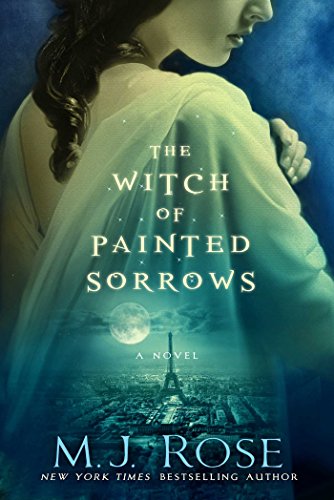
The Witch of Painted Sorrows (The Daughters of La Lune), by M. J. Rose

The Witch of Painted Sorrows (The Daughters of La Lune), by M. J. Rose

Book lovers, when you require a brand-new book to read, discover the book The Witch Of Painted Sorrows (The Daughters Of La Lune), By M. J. Rose right here. Never fret not to find just what you require. Is the The Witch Of Painted Sorrows (The Daughters Of La Lune), By M. J. Rose your needed book now? That's true; you are truly an excellent visitor. This is an ideal book The Witch Of Painted Sorrows (The Daughters Of La Lune), By M. J. Rose that comes from wonderful writer to share with you. The book The Witch Of Painted Sorrows (The Daughters Of La Lune), By M. J. Rose provides the best experience and lesson to take, not just take, yet likewise discover.
The Witch of Painted Sorrows (The Daughters of La Lune), by M. J. Rose

The Witch of Painted Sorrows (The Daughters of La Lune), by M. J. Rose


The Witch of Painted Sorrows (The Daughters of La Lune), by M. J. Rose

Download Ebook PDF The Witch of Painted Sorrows (The Daughters of La Lune), by M. J. Rose

Possession. Power. Passion. New York Times bestselling novelist M. J. Rose creates her most provocative and magical spellbinder yet in this gothic novel set against the lavish spectacle of 1890s Belle Époque Paris.Sandrine Salome flees New York for her grandmother's Paris mansion to escape her dangerous husband, but what she finds there is even more menacing. The house, famous for its lavish art collection and elegant salons, is mysteriously closed up. Although her grandmother insists it's dangerous for Sandrine to visit, she defies her and meets Julien Duplessi, a mesmerizing young architect. Together they explore the hidden night world of Paris, the forbidden occult underground and Sandrine's deepest desires. Among the bohemians and the demi-monde, Sandrine discovers her erotic nature as a lover and painter. Then darker influences threaten--her cold and cruel husband is tracking her down and something sinister is taking hold, changing Sandrine, altering her. She's become possessed by La Lune: A witch, a legend, and a sixteenth-century courtesan, who opens up her life to a darkness that may become a gift or a curse This is Sandrine's "wild night of the soul," her odyssey in the magnificent city of Paris, of art, love, and witchery.

The Witch of Painted Sorrows (The Daughters of La Lune), by M. J. Rose

  • Amazon Sales Rank: #423936 in Books
  • Brand: Rose, M. J.
  • Published on: 2015-03-17
  • Released on: 2015-03-17
  • Original language: English
  • Number of items: 1
  • Dimensions: 9.00" h x 1.20" w x 6.00" l, .0 pounds
  • Binding: Hardcover
  • 384 pages
The Witch of Painted Sorrows (The Daughters of La Lune), by M. J. Rose

Review “Rose's new series offers her specialty, a unique and captivating supernatural angle, set in an intriguing belle epoque Paris—a perfect match for the author's lush descriptions, intricate plot and mesmerizing storytelling. A cliffhanger ending will leave readers hungry for the next volume. Sensual, evocative, mysterious and haunting.” (Kirkus Reviews)“A haunting tale of possession.” (Publishers Weekly)"Rose expertly builds suspense as Sandrine gives into her deepest desires and La Lune’s influence, and the twist ending sets up the next entry in this gothic trilogy." (Booklist)“The New York Times bestselling author returns with what is being heralded as ‘her most provocative and magical spellbinder yet.’ It’s been a while since I dug into a can’t-put-it-down novel of thrills and chills, and this one–a gothic historical fiction set in 1890s Belle Époque Paris–promises to be just that. The tale involves a haunted Parisian mansion, the legends of a fabled sixteenth century French courtesan, a twisted love story, and witchcraft…sign me up for this wild ride!” (Huffington Post)"An elegant tale of rare depth and beauty, as brilliantly crafted as it is wondrously told....melds the normal and paranormal in the kind of seamless fashion reserved for such classic ghost stories as Henry James’ The Turn of the Screw." (Providence Journal)"[MJ Rose] stirs her readers' curiosity and imaginations, opening their eyes to the cultural, intellectual, and artistic excitement that marked the Belle Epoque period. Rose's unforgettable full-bodied characters and richly detailed narrative result in an entrancing read that will long be savored." (Library Journal (Starred Review))"Layered with historical information is the strange and haunting story of two women. The book must be savored slowly to appreciate the skill of the author to tell a great story." (Fredericksburg Newspaper)"Provocative, erotic, and spellbindinglyhaunting...will have the reader totally mesmerized cover-to-cover.A captivating supernatural read that will keep you enthralled… a‘must-have’ novel." (Suspense Magazine)"Rose has a talent for compelling writing, and this time she has outdone herself. Fear, desire, lust and raw emotion ooze off the page." -- New York Times"An elegant writer with a fine style." (Anne Rice)"M.J.Rose is the ultimate seductress, using matters of the heart and history to create word art that is undeniably potent and subtly intoxicating. A deeply evocative and richly woven tale of passion, power, and provocation—and the often inexorable lines that exist between the three." (Hartford Examiner)"A haunting tale of erotic love.... M.J. Rose seamlessly weaves historical events throughout this story filled with distinctive characters that will keep the reader captivated to the end." (Examiner.com)“This atmospheric tale of madness and possession in Bell Epoque Paris is trademark Rose. She skillfully recreates the historic era, combining it with a supernatural mystery and vivid characters.” (Romantic Times Book Reviews)“This belle époque thriller is a haunting tale of obsessive passions.” (People)“Rose proves herself once again to be a consummate storyteller in this provocative and entertaining novel.” (Boston Globe)

About the Author New York Times and USAToday bestseller, M. J. Rose grew up in New York City mostly in the labyrinthine galleries of the Metropolitan Museum, the dark tunnels and lush gardens of Central Park, and reading her mother's favorite books before she was allowed. She is the author of more than a dozen novels, the co-president and founding board member of International Thriller Writers, and the founder of the first marketing company for authors: AuthorBuzz.com. She lives in Greenwich, Connecticut. Visit her online at MJRose.com.

Excerpt. © Reprinted by permission. All rights reserved. The Witch of Painted Sorrows Chapter 1 PARIS, FRANCE APRIL 1894 I did not cause the madness, the deaths, or the rest of the tragedies any more than I painted the paintings. I had help, her help. Or perhaps I should say she forced her help on me. And so this story—which began with me fleeing my home in order to escape my husband and might very well end tomorrow, in a duel, in the Bois de Boulogne at dawn—is as much hers as mine. Or in fact more hers than mine. For she is the fountainhead. The fascination. She is La Lune. Woman of moon dreams, of legends and of nightmares. Who took me from the light and into the darkness. Who imprisoned me and set me free. Or is it the other way around? “Your questions,” my father always said to me, “will be your saving grace. A curious mind is the most important attribute any man or woman can possess. Now if you can just temper your impulsiveness . . .” If I had a curious mind, I’d inherited it from him. And he’d nurtured it. Philippe Salome was on the board of New York City’s Metropolitan Museum of Art and helped found the American Museum of Natural History, whose cornerstone was laid on my fifth birthday. I remember sitting atop my father’s shoulders that day, watching the groundbreaking ceremony and thinking the whole celebration was for me. He called it “our museum,” didn’t he? And for much of my life I thought it actually did belong to us, along with our mansion on Fifth Avenue and our summerhouse in Newport. Until it was gone, I understood so little about wealth and the price you pay for it. But isn’t that always the way? Our museum’s vast halls and endless exhibit rooms fascinated me as much as they did my father—which pleased him, I could tell. We’d meander through exhibits, my small hand in his large one, and he’d keep me spellbound with stories about items on display. I’d ask for more, always just one more, and he’d laugh and tease: “My Sandrine, does your capacity for stories know no bounds?” But it pleased him, and he’d always tell me another. I especially loved the stories he told me about the gems and fate and destiny always ending them by saying: “You will make your own fate, Sandrine, I’m sure of it.” Was my father right? Do we make our own destiny? I think back now to the stepping-stones that I’ve walked to reach this moment in time. Were the incidents of my making? Or were they my fate? The most difficult steps I took were after certain people died. No deaths were caused by me, but at the same time, none would have occurred were it not for me. So many deaths. The first was on the morning of my fifteenth birthday, when I saw a boy beaten and tragically die because of our harmless kisses. The next was the night almost ten years later, when I heard the prelude to my father’s death and learned the truth about Benjamin, my husband. And then there were more. Each was an end-ing that, ironically, became a new beginning for me. The one thing I am now sure of is that if there is such a thing as destiny, it is a result of our passion, be that for money, power, or love. Passion, for better or worse. It can keep a soul alive even if all that survives is a shimmering. I’ve even seen it. I’ve been bathed in it. I’ve been changed by it. Four months ago I snuck into Paris on a wet, chilly January night like a criminal, hiding my face in my shawl, taking extra care to be sure I wasn’t followed. I stood on the stoop of my grandmother’s house and lifted the hand-shaped bronze door knocker and let it drop. The sound of the metal echoed inside. Her home was on a lane blocked off from rue des Saints-Pères by wide wooden double doors. Maison de la Lune, as it was called, was one of a half dozen four-story mid-eighteenth-century stone houses that shared a courtyard that backed up onto rue du Dragon. Hidden clusters like this were a common configuration in Paris. These small enclaves offered privacy and quiet from the busy city. Usually the porte cochère was locked and one had to ring for the concierge, but I’d found the heavy doors ajar and hadn’t had to wait for service. I let the door knocker fall again. Light from a street lamp glinted off the golden metal. It was a strange object. Usually on these things the bronze hand’s palm faced the door. But this one was palm out, almost warning the visitor to reconsider requesting entrance. I was anxious and impatient. I’d been cautious on my journey from New York to Southampton and kept to my cabin. I’d left a letter telling Benjamin I’d gone to visit friends in Virginia and assumed that once he returned and read it, it would be at least a week before he’d realize all was not what it seemed. One thing I had known for certain—he would never look for me in France. It would be inconceivable to Benjamin that any wife of his could cross the ocean alone. Or so I assured myself until my husband’s banking associate, William Lenox, spotted me on board. When he expressed surprise I was traveling by myself, I concocted a story but was worried he didn’t believe me. My only consolation was that we had docked in England and I had since crossed the channel into France. So even if Benjamin did come looking, he wouldn’t know where I’d gone. That very first night in Paris, as I waited for my grandmother’s maid to open the door, I knew I had to stop thinking of what I had run away from. So I re-focused on the house I stood before and as I did, felt an overwhelming sense of belonging, of being welcome. Here I would be safe. Once again I lifted the door knocker that had so obsessed me ten years before when I’d visited as a fifteen-year-old. The engravings on the finely modeled female palm included etched stars, phases of the moon, planets, and other archaic symbols. When I’d asked about it once, my grandmother had said it was older than the house, but she didn’t know how old exactly or what the ciphers meant. After standing at the door for a few moments without gaining entry, I lifted the hand and let it drop again. Where was the maid? Grand-mère, one of Paris’s celebrated courtesans, hosted lavish salons on Tuesday, Thursday, and many Saturday evenings, and at this time of day was usually upstairs, preparing her toilette: dusting poudre de riz on her face and décolletage, screwing in her opale de feu earrings, and wrapping her signature rope of the same blazing orange stones around her neck. The strand of opal beads was famous. It had belonged to a Russian empress and was known as Les Incendies. The stones were the same color as my grandmother’s hair and the highlights in her topaz eyes. She was known by that name—L’Incendie, they called her, The Fire. We had the same color eyes, but mine almost never flashed like hers. When I was growing up, I kept checking in the mirror, hoping the opal sparks that I only saw occasionally would intensify. I wanted to be just like her, but my father said it was just as well my eyes weren’t on fire because it wasn’t only her coloring that had inspired her name but also her temper, and that wasn’t a thing to covet. It wasn’t until I was fifteen years old and witnessed it myself that I understood what he’d meant. I let the hand of fate fall again. Even if Grand-mère was upstairs and couldn’t hear the knocking, the maid would be downstairs, organizing the refreshments for the evening. I’d seen her so many nights, polishing away last smudges on the silver, holding the Baccarat glasses over a pot of steaming water and then wiping them clean to make sure they gleamed. Certainly Bernadette, if it was still Bernadette, should have heard the knocker, but I had been waiting more than five minutes, and no one had arrived to let me in. Dusk had descended. The air had grown cold, and now it was beginning to rain. Fat, heavy drops dripped onto my hat and into my eyes. And I had no umbrella. That’s when I did what I should have done from the start—I stepped back and looked up at the house. The darkened windows set into the limestone facade indicated there were no fires burning and no lamps lit inside. My grandmother was not in residence. And neither, it appeared, was her staff. I almost wished the concierge had needed to open the porte cochère for me; he might have been able to tell me where my grandmother was. For days now I had managed to keep my sanity only by thinking of this moment. All I had to do, I kept telling myself, was find my way here, and then together, my grandmother and I could mourn my father and her son, and she would help me figure out what I should do now that I had run away from New York City. If she wasn’t here, where was I to go? I had other family in Paris, but I had no idea where they lived. I’d only met them here, at my grandmother’s house, when I’d visited ten years previously. I had no friends in the city. The rain was soaking through my clothes. I needed to find shelter. But where? A restaurant or café? Was there one nearby? Or should I try and find a hotel? Which way should I go to get a carriage? Was it even safe to walk alone here at night? What choice did I have? Picking up my suitcase, I turned, but before I could even step into the courtyard, I saw an advancing figure. A bedraggled-looking man wearing torn and filthy brown pants and an overcoat that had huge, bulging pockets, staggered toward me. Every step he took rang out on the stones. He’s just a beggar who intends no harm, I told myself. He’s just looking for scraps of food, for a treasure in the garbage he’d be able to sell. But what if I was wrong? Alone with him in the darkening courtyard, where could I go? In my skirt and heeled boots, could I even outrun him? He was so close now I could see the grime on his face and hands. Smell his putrid odor. From the way he was eyeing me and my luggage, there was no doubt he was planning something. If he tried to grab my suitcase, I couldn’t fight him off. At least a foot taller than me, he was also broad-shouldered and thickset. It was my fault—I hadn’t stopped to ensure the porte cochère was locked behind me. I fumbled in my bag for my keys. Little did it matter they were to our Fifth Avenue mansion in New York City. The familiar feel of them brought on a wave of sadness, but I fought it off. My immediate situation required acting quickly. Jangling the keys, I pretended to use them, all the while feeling his eyes on my back. Holding my breath, I waited to hear his retreating footsteps. But there was no such sound. So I called out, as if to my grandmother’s maid, that it was all right, I would get the door myself. I knew the beggar understood me. Even though I’d grown up in America, my father had taught me to speak French with an accent as good as any local’s. When I still didn’t hear the stranger’s retreating footsteps, I called again to Bernadette that she should tell my husband or the houseman to come down, that the lock was stuck and I needed help with the suitcase. Finally, from behind, I heard a sound. At last. The tramp was leaving. But no! I was wrong. He was laughing. And coming closer. “There’s no one home,” he called out. With my hand still on the doorknob, I half turned. “Get away from here before you get in trouble.” “Everyone who lives here has been gone for over a week.” “You’re wrong. They are all home. Someone is coming now, so you should leave while you can.” The beggar laughed again. “Moved out. Saw them myself. The fancy madame and her maid and her manservant. Valises and boxes galore.” “You are mistaken. They are all here upstairs, and my husband—” “You may have a husband. And he very well might have been here . . . so very many women’s husbands come here . . . but if yours was here, he’s long gone.” He took another step and reached out for my suitcase. At the same time leering at me with an expression that suggested he might decide to take more than my luggage. I was frozen, unable to move, to run, to scream, or to make any effort at all to help myself. My shoulder pushed against the door as I twisted the doorknob, willing it to somehow magically open and give me entry. I might as well have been standing in front of a stone fortress. I was trapped. Powerless again. And then something changed. I felt a surge of anger. A refusal to accept what seemed so inevitable. “Get away from me,” I shouted as if my words were a weapon. The vagabond laughed at me, knowing better. Indeed, nothing should have suggested that my words were a force to be reckoned with except my sense that they were. I let go of the doorknob, shouted at him again to leave, and when he didn’t, outrage and anger and frustration all mixed together, and from a place that I didn’t know I possessed, determination and fearlessness rose up. I pushed the man away from me. “No!” I shouted. And again, “No!” in a voice that was unrecognizable to me. Something inside me refused to accept what was happening. The surprise attack sent the stranger sprawling, and he slid down the steps into the gutter. I hadn’t known he was carrying a knife until I saw it fall from his hand onto the cobblestones. It lay there next to him, glinting in the street lamp’s light. Rushing, I grabbed it just before he did. And then I felt the man’s fingers wrap around my ankle and grip it tightly. No! I kicked free. And then kicked again, the toe of my boot making contact with his nose, or his chin or his cheek—I couldn’t see, but I heard a sickening crack. He let out a primitive howl far louder than my own shouts. Blood began to trickle from his nose. He writhed in pain. Who was I? I did not know the woman capable of this. What were the limits of her abilities? I only knew that she was fighting for her life, and that unlike me she thought her life was worth fighting for. “You whore,” the man bellowed as he began to rise up. He was looking at me so differently now. Before he’d appraised me as if I were a prize waiting to be claimed. Now I deserved punishing. It was there in his expression of fear mixed with hatred. “Give me back my knife!” “Don’t come any closer to me or I’ll use it,” I shouted back. My father had taught me how to use a pistol, but for me a knife had no use other than cutting the chicken or beef on my plate. But I sensed this new woman I’d become knew how to wield one. Suddenly the door of the mansion next to my grandmother’s was flung open, and a man rushed out, yelling as he ran down his steps. He brandished a pistol. “Who is there? What is going on?” The would-be thief cast one glance toward the newcomer and his weapon and took off. In seconds all that remained of him was an echo of his wooden shoes clattering as he ran away. The knife fell from my hand with a clang as the energy drained out of my body, and I sank to my knees. “Are you hurt?” the man asked in an impossibly familiar voice. Slowly, I lifted my head and looked at him. It had been ten years since I’d been in Paris, but my grandmother’s next-door neighbor had hardly changed. If there was more gray in his hair, I couldn’t see it in the dim light. “Professor Ferre?” “Mais oui,” he said, surprised and confused as to how I might know him. In those same ten years, I had changed. Grown from a hopeful young girl of fifteen to an aggrieved twenty-five-year-old woman. “It’s Sandrine.” “Sandrine! Oh my. Are you hurt?” “Yes.” “Where? How?” “My foot. My ankle is twisted, that’s all . . . but I . . . I . . .” “You are in shock. Come, let me help you inside. My wife will get you some dry clothes. We’ll take a look at your foot.” I looked down, almost surprised to see my dress and shawl were completely soaked through. “But my grandmother, where is she?” “Come inside first. You need dry clothes and a glass of wine. I will explain.” He put his arm around me and started to walk me away from my grandmother’s house toward his own. “My luggage,” I said. “I’ll come right back and get it,” he said. “That man is gone. It’s safe for a few moments. This normally never happens. The porte cochère is kept locked when the concierge goes out. That fool must be drunk again.” We walked down the few steps from one front door and up the few steps to the other. All the buildings here had been built at the same time, and had similar layouts inside. But whereas the vestibule in my grandmother’s house was ornate and lavish, the inside of the professor’s house was elegant and subdued. I had been here before, all those years ago, and like the owner, it did not seem to have changed. He sat me in a velvet, deep-cushioned chair in the parlor despite my dripping clothes and called up to his wife, who, hearing the racket, was already halfway down the stairs. Madame Ferre was dressed in a camel silk afternoon dress with cream lace at the throat and wrists, and her once glorious chestnut hair was shot through with gray. But she was still lovely, with warm brown eyes that my grandmother said showed how guileless she was. “You can always tell how wicked a woman’s life has been by the light in her eyes, Sandrine,” she used to tell me, and then she’d look into my eyes and say: “I see good, only good, in your honeyed eyes, mon ange. Stay like that, Sandrine. Don’t become like me. Don’t light any fires . . . Too easily the flames leap out to lick and burn you.” And then she’d smile in that coy way she had and kiss me lightly on my forehead as if blessing me. But I never quite believed her because, as much as she admired women like Madame Ferre and my mother, I knew Grand-mère regarded their lives as boring. “What is all the racket about, Louis? I didn’t know you—” And then, seeing me, Madame Ferre stopped talking. “It’s Eva’s granddaughter, Sandrine,” the professor told his wife. “Of course it is,” she said as she took me in her arms and began to fuss over me, pulling the sodden shawl off my shoulders and brushing my wet hair off my face. “You poor child, soaked to the bone. What on earth happened?” Her kindness, the warmth of their home with the flickering fire in the hearth, and all of its familiarity brought me close to tears, but I held back. It would not do to cry in front of these two people. “Are you all right?” she asked. I nodded. “Henri must be at the café again,” the professor said. “We need to do something about him. He left the porte cochère open, and that beggar who has been hanging around all week came after her. I need to go get her luggage before some other malcontent makes off with it.” “What did he do to you, dear?” Madame Ferre asked in a low voice once her husband had left the room. “He only grabbed my foot. I twisted my ankle getting loose.” I was still shivering, half from cold, half from shock. How had I been able to fight that man off? I’d never done anything like that before. “You are freezing and can catch your death this way,” Madame Ferre said as she helped me to my feet. “You need a warm bath and dry clothes.” My ankle gave way under me, but she had me by the elbow and kept me standing upright. “Can you hobble upstairs with me? How bad is the pain?” I tested it. “As long as I’m careful, it’s all right,” I said. I wanted the bath she was offering more than I cared about the twinges. I allowed myself to be escorted up the staircase and into the bathroom, where I sat and watched as Madame Ferre drew a bath for me, loaded it with salts, and then helped me out of my clothes. While I soaked, she left to get me some of her things to wear, and when she came back ten minutes later, her arms full of clothes, I realized I’d fallen asleep in the warm water, which was now growing chilly. Madame Ferre opened a large bathsheet and held it up as I stepped out of the tub. Then, wrapping me in the towel’s softness, she proceeded to rub me dry. Her motherly kindness was very welcome but also awkward to accept. The Ferres had three sons and a daughter. When I was fifteen, my parents took me on a tour of the continent and, when they went off to Russia, where my father had business, left me to stay in Paris with my grandmother. During that spring I met all the Ferre children. Their youngest son, Leon, was eighteen and a sculpture student at the École des Beaux-Arts. We became fast friends. Many afternoons, Leon and I would go to the Louvre, where, as part of his schoolwork, he was modeling a copy of a sculpture by Canova of Cupid reviving Psyche, who lay unconscious on rocks. The artist had captured the moment just before the winged god kissed Psyche awake. The eroticism in the marble masterpiece fueled the growing attraction between us. For hours at a time I would sit and watch Leon model, awed by his talent, stirred by— What was it? What is it ever that ignites that first spark? All I knew was that I was sure there would never be anyone like him in my life again, and I wanted to soak up every minute with him that I could. Sometimes I’d imagine feigning a faint so that Leon would stop his work . . . come to me . . . bend over me and touch me with his lips, reviving me the way Cupid was reviving Psyche. Oh, how I fantasized about his kisses. At first my grandmother assumed our friendship was charming and innocent, but as the weeks passed, she suspected our growing passion and began to spy on us. When her suspicions were confirmed, she went to his parents. We were forbidden to see each other alone after that, which only made us more determined. I bribed one of my grandmother’s maids, Marie, to sleep in another servant girl’s room. Marie’s window, which was large enough for a man to crawl through, faced a narrow alley that our house and Leon’s shared. That night, after midnight, he sneaked out and came to me through the window. We met three more times that way. On the third night Grand-mère found us. I was naked, and Leon was wearing his shirt. We were wrapped in each other’s arms, kissing, when my grandmother pulled us apart. Ignoring me, she grabbed Leon by the arm, dragging him out of our house and to his own front door. I wrapped myself in a blanket and ran after them, crying, begging my grandmother not to say anything to his parents, that it was my fault, not his. When the professor came to the door and saw Grand-mère, eyes ablaze, holding his practically nude son, he understood exactly what had happened. Saying nothing, he reached out and slapped Leon. Leon accepted the blow. His head fell forward. He began to gasp for air. Within moments he dropped to his knees on the stone cold steps as he desperately tried to breathe. And then Leon fell, still gasping, onto his side. I screamed and ran forward, but my grandmother stopped me from going to him. She held me in her arms, held me as if just holding me was going to make everything all right, but it didn’t. The professor raced inside—to get his son’s medicine, as it turned out—but by the time he returned minutes later, there was nothing he could do. Leon died of an asthma attack in his father’s arms. He died while I stood there, helpless, watching in horror. I don’t remember what I did after that, but I’ve been told I was ill for days: burning up with a fever and delirious. All I could think was that if Leon hadn’t been with me, if we hadn’t sneaked off, he would never have died. It was my fault. It was because of my passion, my hunger, my joy of being with him, of wanting more of him touching my breasts and whispering behind my ear . . . It was my fault for wanting to feel his lips bruising mine, for wanting to taste his sweet mouth . . . for craving the sensations building inside of me that I’d never felt before and that were so glorious . . . feelings I couldn’t get enough of. It was my fault because I wanted his fingers teasing me . . . touching me where he shouldn’t . . . making my heart quicken . . . making magic. It was my fault for not wanting to be a girl anymore but to come to life as a woman as I lay under him. It was that desire in me, those needs, that killed the first boy I’d ever kissed . . . those cravings that were responsible for the first man I’d ever loved dying. I vowed never to allow myself those feelings again. There was no good to come of them. In my delirium I saw myself as a succubus, one of those demon women I’d read about in the mythology books my father gave me. Evil beings I’d had nightmares about. Now, ten years later, there I was, naked in Leon’s mother’s boudoir, and she was pulling a silken chemise over the same skin that her son had pressed his lips to. How had her husband been able to abide bringing me into their home? How could they not hate me? How could Leon’s mother and father show me such kindness? “There,” she said as she buttoned a dress up in the back. The fabric smelled of a fine, expensive perfume, and I felt cosseted and safer here than I had felt in weeks. “Madame Ferre, can you tell me where my grandmother is? Why is the house dark? Why are the servants all gone? She never travels this time of year. Is she . . .” I was afraid to even say the words out loud. “Is she all right?” My voice broke as I asked. My father was dead. I’d left my husband. And if Grand-mère was gone . . . “She’s fine, Sandrine,” Madame Ferre said. “Your grandmother is planning a renovation. She’s taken an apartment not far from here so she can supervise the work. Come, finish getting dressed, and I’ll get you something to eat, and then we’ll take you to her.” “There’s no need to do that, Bridgitte.” I recognized the rich honey-toned voice and spun around. There was my grandmother in all of her glory. Blazing orange hair, fire opals at her ears and around her throat. A burnt-orange silk dress with black lace trim swirling around her. I expected her to greet me the same way she used to when she visited me in New York, with open arms and joy, but the woman standing in the doorway was frowning. “Sandrine, didn’t I tell you never to come back to Paris? This city is poison for you.” Her voice was tense and tight. “Why didn’t you listen?” And in those last four words I heard something I’d never heard in her voice before—fear.


The Witch of Painted Sorrows (The Daughters of La Lune), by M. J. Rose

Where to Download The Witch of Painted Sorrows (The Daughters of La Lune), by M. J. Rose

Most helpful customer reviews

13 of 14 people found the following review helpful. Palpable Melancholy By Diana Faillace Von Behren Sorrow and disappointment pulse through all of M. J. Rose's heroines; in "The Witch of Painted Sorrows," the first installment in Rose's "Daughters of La Lune" series, first person narrator Sandrine Verlaine is no exception. Grieving for the death of her father and receiving no sympathy from her brute of a husband, Sandrine flees from her home in New York to the Paris of the Belle Epoque. Her grandmother, the fiery red-headed courtesan of the demimonde, embraces her with open arms, providing a sanctuary where Sandrine can recover and pull the pieces of her life back together. With almost no experience in the art of love, Sandrine finds little to relate her life of strangled pleasures to that of her grandmother's lusty experiences--that is until she becomes fascinated with the Maison de la Lune, a house wreathed in the history of her family and recently closed for some unknown reason by her taciturn grandmother.Rose explores Sandrine's hungry desire for identity in the same way that she depicts the angst of her character Jac L'Etoile in The Book of Lost Fragrances: A Novel of Suspense, Seduction: A Novel of Suspense and The Collector of Dying Breaths: A Novel of Suspense who is plagued by dreams and images of reincarnation until she finds her ultimate happiness. Perhaps, Rose's theory consists of a simple premise: humans are tortured by thoughts of the unknowable until they find an all-consuming purpose. With such purpose, the need to squelch melancholy and thoughts of death and sadness are forgotten--an immunity is created. The darkness, the sadness as represented and evoked by La Lune cannot take hold. Like Jac L'Etoile, Sandrine becomes prey to the sad strength of La Lune, an ancestor of the Verlaine family who suffered greatly.With that in mind, the tone of "Witch" replicates the tone of Rose's other novels--the sadness permeates the reader with its sense of loss and its desperate need for vanquishing in a way that may not be appealing to many readers. Those expecting a joyful, triumphant resolution, realize beforehand that as the first in a new series, this novel acts as an introduction to installments of cautionary tales. After the novel's conclusion, Rose provides an excerpt to "The Jeweler of Stolen Dreams" which, although not labeled as the second book in the series, most likely is, as it begins in Paris in 1918.Rose's first person voice is fraught with the same mixture of innocence and pressing motivation as her characters from her other novels. She relies upon the intimacy of this voice to compensate for a lack of excessive detail that would bring the Belle Epoque to life from the perspective of a historical novel. Instead she envelopes the reader in the events of the narrator's life as they occur, describing events and places as Sandrine experiences them rather than constantly remind the reader that the novel takes place in another era where sensibilities, styles and protocols were much different. It works.Nevertheless, there is a deadness to the character that fails to make her likeable; as I tumbled towards the last page of "Witch," I wasn't necessarily rooting for Sandrine. Perhaps, I had already realized that she was the introductory vessel for an entity that would make its appearance known in the other La Lune novels. Even Sandrine's engagement in lustful acts with the lover of her dreams does not succeed on the level that one would expect; something is missing but, these only detract a little juice to the story which is, otherwise, an entertaining albeit melancholy read.Bottom line? In "The Witch of Painted Sorrows," M. J. Rose returns to what she is best known for--a novel of human longing, disappointment and a turning to the occult to find answers to staunch the pain. Good read. Recommended.Diana Faillace Von Behren"reneofc"

9 of 10 people found the following review helpful. A gorgeous tale of the strength of the feminine, sensuality and the occult in La Belle Epoch Paris By Nichole B. There are no words for how much I loved this book.The Witch of Painted Sorrows is the tale of a young American woman who flees to her grandmother's mansion in Paris to get away from her tyrant husband. When she gets there, however, Sandrine finds more than she bargained for in the form of La Lune, a woman of family lore who may still be haunting the house. Through her influence, Sandrine learns to paint, exert her own willfulness, and perhaps most shockingly (to herself at least) embrace her sexuality and sensuality.This book was incredibly atmospheric evoking the glamour and mystery of La Belle Epoch Paris, nearly gothic in places - it gave me shivers! The house and city become as much characters as the people in the book.Though Sandrine isn't much developed as a character before her first encounter with La Lune, the changes wrought in her serve to show the reader what she must have been like before. (And I have to say, go La Lune! A woman before her time.) I wish Julien had been a little more developed, but he still served as the perfect pairing of the empowered Sandrine, and foil to her husband. Sandrine's courtesan grandmother may have been the most developed of all the characters. Watching what happens to her was heartbeaking.And the sex! *fans self* This is not erotica by any means, but in the hands of a skilled author like MJ Rose, the sex scenes are amazing. Give me this over 50 Shades any day.As a fan of all things mystical and occult, this book was right up my alley. I loved the reference to the fire opals and rubies (hope she does more with the stones' symbolism in later books) and the depiction of spiritualism and the occult rites toward the end was spot on from research I've done. Plus, the idea of a ghost possibly possessing someone always lends an air of the uncanny.I have to say I'm wondering what she's going to do with the rest of the series. The ending was well tied up, save for one shocker that made me sit back and say, "okay, bring on book 2!"

8 of 9 people found the following review helpful. Thumbs Down for The Witch of Painted Sorrows By Second Run Reviews I was excited to receive a copy of The Witch of Painted Sorrows by M.J. Rose from Atria for review. I fell under Ms. Rose’s enchantments after zooming through the first four books in The Reincarnationist series a few years ago. I discovered that her books often combine the paranormal with mysticism and historical fiction. She is deft at sharing history and creating suspense that keeps me turning the pages.Sadly, I was disappointed upon finishing The Witch of Painted Sorrows. The elements that I love about Ms. Rose’s books were there, but it just didn’t quite come together. I felt Rose was holding something back. The history of La Lune, her power and her connection to the occult were never quite revealed. It was hiding there in the shadows and it became quite frustrating waiting and wondering when it would all spill out. Because things were not revealed and did not quite come together, the ending was muddled, rushed, confusing and unsatisfying.I loved Sandrine’s passion and desire to become her own person in a time when women were not necessarily allowed to do so. I admired her bravery to stand up to her husband and escape an abusive relationship. The downside to Sandrine’s character is that it was hard to figure out whether her decisions (after her arrival in Paris) were her own or were due to the influence of La Lune. I believe that Sandrine naturally possessed some of those characteristics. However, she’s influenced by La Lune so quickly, you do not get to know much about Sandrine alone to know which actions are hers versus those of La Lune.Despite my love for past books by M.J. Rose, I was not impressed with this latest release. The story fell short by not revealing enough and what was revealed led to a messy, stalker-ish ending that made my skin crawl (and not in a good way). The Witch of Painted Sorrows by M.J. Rose receives a thumbs down.After ThoughtsAfter finishing the novel, one part continues to bother me. Sandrine attended the opera where Charlotte was performing. Her date for the evening guides her to an underground safe spot within the opera house. How the hell did Sandrine get out of there?I received this book for free in exchange for a honest review. This does not affect my opinion of the book or the content of my review.This review was originally posted on Second Run Reviews.

See all 145 customer reviews... The Witch of Painted Sorrows (The Daughters of La Lune), by M. J. Rose


The Witch of Painted Sorrows (The Daughters of La Lune), by M. J. Rose PDF
The Witch of Painted Sorrows (The Daughters of La Lune), by M. J. Rose iBooks
The Witch of Painted Sorrows (The Daughters of La Lune), by M. J. Rose ePub
The Witch of Painted Sorrows (The Daughters of La Lune), by M. J. Rose rtf
The Witch of Painted Sorrows (The Daughters of La Lune), by M. J. Rose AZW
The Witch of Painted Sorrows (The Daughters of La Lune), by M. J. Rose Kindle

The Witch of Painted Sorrows (The Daughters of La Lune), by M. J. Rose

The Witch of Painted Sorrows (The Daughters of La Lune), by M. J. Rose

The Witch of Painted Sorrows (The Daughters of La Lune), by M. J. Rose

Kamis, 18 April 2013

Dark Star, by Oliver Langmead

Dark Star, by Oliver Langmead

This is some of the advantages to take when being the participant and get guide Dark Star, By Oliver Langmead here. Still ask what's different of the other website? We offer the hundreds titles that are created by recommended writers and publishers, around the globe. The link to get and also download and install Dark Star, By Oliver Langmead is likewise very simple. You could not discover the challenging website that order to do more. So, the method for you to get this Dark Star, By Oliver Langmead will be so very easy, will not you?

Dark Star, by Oliver Langmead

Dark Star, by Oliver Langmead


Dark Star, by Oliver Langmead

Best Ebook Dark Star, by Oliver Langmead

A unique blend of science fantasy, hardboiled crime and epic verse. The city of Vox survives in darkness, under a sun that burns without light. In Vox’s permanent night, light bulbs are precious, the rich live in radiance and three Hearts beat light into the city. Aquila. Corvus. Cancer. Hearts that bring power to the light-deprived citizens of the city of Vox whilst ghosts haunt the streets, clawing at headlights. Prometheus, liquid light, is the drug of choice. The body of young Vivian North, her blood shining brightly with unnatural light, has no place on the streets. When Cancer is stolen, the weaponisation of its raw power threatens to throw Vox into chaos. Vox needs a hero, and it falls to cop Virgil Yorke to investigate. But Virgil has had a long cycle and he doesn’t feel like a hero. With the ghosts of his last case still haunting his thoughts, he craves justice for the young woman found dead with veins full of glowing. Aided by his partner Dante, Virgil begins to shed light on the dark city’s even darker secrets. Haunted by the ghosts of his past and chased by his addictions, which will crack first, Virgil or the case?

Dark Star, by Oliver Langmead

  • Amazon Sales Rank: #1037012 in eBooks
  • Published on: 2015-03-10
  • Released on: 2015-03-10
  • Format: Kindle eBook
Dark Star, by Oliver Langmead

Review This is a debut from Langmead and wow what a debut ... It is a remarkable read, and an easy one. The dark city is an eerie backdrop, filled with ghosts (literally) and shadow, a compelling setting richly invoked by the writing. There is a deft world-building at work in here and a riveting story. **** -- Peter Sutton BRSBK Blog Langmead's achievement both satisfies starved poetry fans and demonstrates an astonishing facility with words and storytelling. Either way, it's a kick-ass story. **** -- Tracie McBride Exquisite Corpse Dark Star is one of those gems that creeps up and takes you by surprise. Beautifully written, masterfully plotted, and built around a character that is at once a complete stranger and an old friend. In short, a masterpiece. **** -- Matt Craig Reader Dad Truly fresh and original (at least I have never read such a science fiction story before), Dark Star is an engaging, visual story that forces the reader into a slightly different vein of reading experience-one they will undoubtedly emerge from with neon glowing in their eyes. Perfectly paced and structured yet in a form virtually unknown to the genre, Dark Star is detective noir for the 21st century. **** Speculiction

About the Author Oliver Langmead was born in Edinburgh and now lives in Dundee. He has an LLB in Law, and an MLitt in Writing Practice and Study, with a distinction. In his own words, he is occasionally seen behind a midi keyboard or shouting into a microphone, but mostly behind a regular household keyboard, agonising over word order.


Dark Star, by Oliver Langmead

Where to Download Dark Star, by Oliver Langmead

Most helpful customer reviews

2 of 2 people found the following review helpful. Sin City meets detective noir By Han Jie There are many modes and styles of storytelling. Classic, minimalist, expository, stream of consciousness, mosaic, metafiction—and on and on go the ways in which an author can transpose their imaginings into fiction. But poetry? Have you ever read science fiction in metered form? Time to waste, so I escape the city At one of those seedy establishments They call ‘Glow Shows’ because they fill the girls So full of Pro’ it nearly burns their veins. Prometheus, resident wonder-drug; Pro’, Promo’, ’Theus, liquid-f*****-light; Prohibited by city law and shot By yours truly, Virgil Yorke, hero cop (1)So run the first lines of Oliver Langmead’s Dark Star (2015, Unsung Stories). And what follows is a story that lives up to every ounce of vividness contained in those few words—a proper story, just in measured form.The effect replete, when Detective Yorke is called to the late night scene of a murder, the emptiness between the lines makes what imagery that is in the lines—the corpse’s neon veins—twice as powerful. The city of Vox perpetually dark, the young woman’s body glows in the back alley, begging Yorke—and the reader—to learn what has transpired. But just as his investigation begins, an even bigger crime calls Yorke away. Vox dependent on the power generated by three dying stars, one has been stolen. So, into the cold, dark night Yorke goes, battling his own addictions every step of the way, the metered verse stripping his story down to its evocative essentials.The beautiful cover image precisely relaying the imprint of the story, Dark Star is an intensely visual experience. Akin to the aesthetic of the Sin City films, Yorke’s path through his own haunted life as well as the depths of Vox’s ghettos and aristocracy lifts off the page in a swirl of neon, broken streetlights, dark alleys, and cigarette smoke. The rhythm and flow of language pitch perfect for the classic minimalism of hardboiled noir, the story virtually pops into the reader’s field of vision, after-images burning like tracers through the night.Thus, the reader wary of reading science fiction in poetic form needn’t worry. Dark Star, while requiring a slight shift in gears compared to standard third-person omniscient narration, is highly readable—more rhythm than rhyme. Erasing the thought ‘Oh no, not more cyberpunk noir…”, the brisk pace, perfect balance of story elements, and simple but tight plotting make for a highly engaging, unique read through the use of language. Anybody can partake, but it will hit the sweetest spot for the reader keen on lexical flow.For those interested, Dark Star makes room for rumination on the classics. Aside from the epic poetry form, the fact the main character is Virgil, his partner Dante, the setting dystopian, and the investigation curtailing the absence of light in their dark world, all pave the way to open discussion beyond the text. Difficult to go deeper without spoiling the ending, suffice to say Langmead seems interested in critiquing, if not inverting, the Divine Comedy. The final scene, as well as the chapter endings, pointing in a different direction than Aquinas, I’d hazard a guess that the Aenid won out. Regardless, all is a poetic vision of hell that one must read to make up their own mind about Langmead’s angle.Kudos go to Unsung Stories for being willing to publish this extremely unique… book. (‘Novel’ seems it should go at the end of that sentence, but just doesn’t quite do the content justice). When so much of publishing these days is interested in producing the equivalent of pop music, it’s truly pleasurable to have such small publishers willing to present alternative material for the reader of speculative fiction interested in more.Truly fresh and original (at least I have never read such a science fiction story before), Dark Star is an engaging, visual story that forces the reader into a slightly different vein of reading experience—one they will undoubtedly emerge from with neon glowing in their eyes. Perfectly paced and structured yet in a form virtually unknown to the genre, Dark Star is detective noir for the 21st century.

2 of 2 people found the following review helpful. Turning on all the lights by the end By littlevoice Let's talk first about Langmead's audacious decision to write his debut novel in the form of an epic poem. I have to confess to being unfamiliar with the form, and my potential appreciation was further hampered by the fact that I read the novel on my Kindle using an over-large font (all the better to not have to get out my reading glasses, my dear), which messed with the way the verses are intended to appear on the page. Still, it didn't slow me down in the slightest. One might argue that the use of an epic poem form was unneccessary, as the story would flow just as easily in verses or in conventional prose form; but then, one could also argue that Langmead's achievement both satisfies starved poetry fans and demonstrates an astonishing facility with words and storytelling.Either way, it's a kick-ass story.Think Bladerunner (I wonder if the character of Rachel is a nod to the aforementioned movie), only much, much bleaker. In this world, light is currency, light is a drug, light is treasured and elusive. The darkness is both metaphorical and real (this story is noir in all senses of the word), all-pervasive and claustrophobic. The thought and detail that goes into realizing this perpetually black world - print books are an extravagance when most "writing" is in braille, there are no days but only 'cycles', and even the cattle have evolved into strange, blind, albino creatures - is razor sharp. Langmead makes no secret of his influences in naming two main characters Virgil and Dante, and indeed the hellish atmosphere is almost palpable, leaving me breathing deeply and turning on all the lights by the time I got to the end.If you like poetry (especially epic poetry) - you need to read this. If you like classic noir detective stories - you need to read this. If you like imaginative science fiction/fantasy - you need to read this.

1 of 1 people found the following review helpful. Epic Sci-fi Verse By Wendell I have to admit epic poems like the Iliad, the Odyssey, the Aenid, Beowulf, Paradise Lost, and The Divine Comedy have never been my favorite reads. In fact, I pretty much hated them back in my college days. So when I first discovered that Dark Star utilized that same metered writing form, I was concerned. Terrified almost. But, after giving Oliver Langmead’s sci-fi verse a try, I found Dark Star a fresh, and easily readable novel.The story itself begins as a moody, noir tale focusing on Detective Yorke. This downtrodden and gloomy fellow is a cop in the city of Vox. What makes his life so unusual is that upon his world there is no light. Instead Yorke’s world is covered in perpetual darkness; an all encompassing and smothering blackness of both the senses and the spirit. Naturally, light is treasured above all else: it is money; it is happiness; it is a recreational drug worth dying for!A fact that Yorke already knows, but which is reinforced when he and his partner arrive at a murder scene, discovering a young woman’s corpse; her cold body on fire with light; her veins pulsing like a human light bulb. Her state announcing to all that a new light drug has hit the streets; one of such power that our detective is both terrified and tantalized by. But as powerful people try to sweep this death under the rug, world weary Detective Yorke doubles down, determined to investigate the crime even if it entangles him in an even bigger conspiracy – one so massive, so unbelievable that he could never have envisioned it!As other have already observed, Dark Star is an intensely visual experience told in rhythmic language. Yes, it has many characteristics of a cyberpunk noir, but that is not what it is. Rather it is a science fiction story that folds more than one literary genre into its concoction, using the perfect flow of its lyrical narrative to take a reader into the haunted life of Detective Yorke, deep into the grimy alleys of the city, through the halls of the mighty, and ultimately to an ending that asks many deep philosophical questions.Even with that being said, this isn’t a novel that every sci-fi fan will warm too. Its epic verse narrative will put many off. Its philosophical quandaries will infuriate some. The limits to the characterization will disappoint others. But instead of focusing on the dislikes that I personally had with it, I prefer to recall the positives. For without a doubt, Dark Star is a truly fresh and original science fiction story that is entertaining, visually compelling, and lyrically engaging. Oh, poetry starved fans will love it more than others, but everyone can appreciate the slightly different path that Oliver Langmead traveled with his sci-fi epic in verse. And I for one applaud his herculean effort.

See all 7 customer reviews... Dark Star, by Oliver Langmead


Dark Star, by Oliver Langmead PDF
Dark Star, by Oliver Langmead iBooks
Dark Star, by Oliver Langmead ePub
Dark Star, by Oliver Langmead rtf
Dark Star, by Oliver Langmead AZW
Dark Star, by Oliver Langmead Kindle

Dark Star, by Oliver Langmead

Dark Star, by Oliver Langmead

Dark Star, by Oliver Langmead

Rabu, 17 April 2013

The Bellbottom Incident (The Incident Series Book 3), by Neve Maslakovic

The Bellbottom Incident (The Incident Series Book 3), by Neve Maslakovic

From now, finding the completed website that sells the finished books will be numerous, yet we are the trusted website to go to. The Bellbottom Incident (The Incident Series Book 3), By Neve Maslakovic with easy web link, very easy download, and completed book collections become our better solutions to obtain. You could discover as well as utilize the perks of picking this The Bellbottom Incident (The Incident Series Book 3), By Neve Maslakovic as every little thing you do. Life is constantly creating and also you require some new book The Bellbottom Incident (The Incident Series Book 3), By Neve Maslakovic to be reference consistently.

The Bellbottom Incident (The Incident Series Book 3), by Neve Maslakovic

The Bellbottom Incident (The Incident Series Book 3), by Neve Maslakovic


The Bellbottom Incident (The Incident Series Book 3), by Neve Maslakovic

Read Online and Download The Bellbottom Incident (The Incident Series Book 3), by Neve Maslakovic

Julia Olsen and Nate Kirkland, St. Sunniva University’s time-traveling crime-stoppers, are back and facing their toughest challenge yet in this third and final installment of the series. Sabina, their adopted niece from the lost city of Pompeii, has gone missing—in the bellbottom decade, of all places. The situation requires sharp investigative skills of the literary kind, as Sabina has managed to outwit History and disappear into parts unknown, with the only clues to her whereabouts hidden in a Kurt Vonnegut novel. But fiction and reality collide as it soon becomes clear that the consequences may be all too real…and all too high. Can Julia and her teammates rescue Sabina before the final, unstoppable showdown with History? Continuing where The Far Time Incident and The Runestone Incident leave off, The Bellbottom Incident brings the series to a gripping conclusion in this lively adventure through history, science, and literature.

The Bellbottom Incident (The Incident Series Book 3), by Neve Maslakovic

  • Amazon Sales Rank: #396017 in eBooks
  • Published on: 2015-03-31
  • Released on: 2015-03-31
  • Format: Kindle eBook
The Bellbottom Incident (The Incident Series Book 3), by Neve Maslakovic


The Bellbottom Incident (The Incident Series Book 3), by Neve Maslakovic

Where to Download The Bellbottom Incident (The Incident Series Book 3), by Neve Maslakovic

Most helpful customer reviews

3 of 3 people found the following review helpful. Back to my college days, by way of the future By Glenda Boozer It isn't easy to be a teenager from ancient Pompeii, trying to adjust to the 21st Century. Sabina, who came back with Julia and Nate at the end of the Far-Time Incident, decided to just take the time machine back to the first century and save everyone a lot of bother, but the settings weren't for the year 76, but for '76, as in 1976. Instead of volcanoes and ancient Romans, we have bellbottoms and painted vans. At least the sandals are similar.As Julia and her friends search for Sabina, they are plunged into the time of their parents, with all the stickiness that can result - or can it? Can history handle this? Can the people of the 20th and 21st centuries handle it? Can they change history?I'm always a bit sad to reach the end of a beloved series, but I'm not dissatisfied, just a bit wistful. Neve Maslokovic doesn't leave us hanging in the end. I can't wait to find out what she'll write next!

1 of 1 people found the following review helpful. 3rd in her STEWie series - saved the best for last? By JanS The author states that's it's her favorite & the last in her STEWie (SpaceTimEWarper) series. Usually I'm not a fan of Time Travel -- due to the usual grandfather/changing history logic. But I really liked the way she sets up the "rules" in this world of Time Travel - in contemporary time, and I found her writing so good it was easy to suspend the what if's & still follow her logic. An adventure with added bonus of my fave parts - romance with mystery & suspense were great ... the only thing I didn't like about it .. is her statement it's the last ... hopefully it's not .. or whatever she writes next is just as great or even better!

0 of 0 people found the following review helpful. Good time travel! By WitchyD Thus far, I've read all of Ms. Maslakovic's novels on both time travel and alternate universes. I've enjoyed each one!"Bellbottom" continues the story of the St. Sunniva time traveling department and assistant to the dean, Julia Olsen. While I did enjoy the tale, and of course more travels via STEWie, I found this one my least favorite, but not because it's badly written or anything. I guess the 70's aren't all that fascinating to me (having been there) so I rather liked it when the team goes to "Far Time" instead. But never mind my quirks, this is still a great read and Maslakovic's writing seems to be getting better and better with each novel she writes. When you can pull of "believable" science fiction that is just this bit shy of being within the realm of possibility (no magic, no aliens, no wormholes, just science), I'd say you have a hit. I really hope this series continues with other adventures in History.

See all 20 customer reviews... The Bellbottom Incident (The Incident Series Book 3), by Neve Maslakovic


The Bellbottom Incident (The Incident Series Book 3), by Neve Maslakovic PDF
The Bellbottom Incident (The Incident Series Book 3), by Neve Maslakovic iBooks
The Bellbottom Incident (The Incident Series Book 3), by Neve Maslakovic ePub
The Bellbottom Incident (The Incident Series Book 3), by Neve Maslakovic rtf
The Bellbottom Incident (The Incident Series Book 3), by Neve Maslakovic AZW
The Bellbottom Incident (The Incident Series Book 3), by Neve Maslakovic Kindle

The Bellbottom Incident (The Incident Series Book 3), by Neve Maslakovic

The Bellbottom Incident (The Incident Series Book 3), by Neve Maslakovic

The Bellbottom Incident (The Incident Series Book 3), by Neve Maslakovic

Senin, 15 April 2013

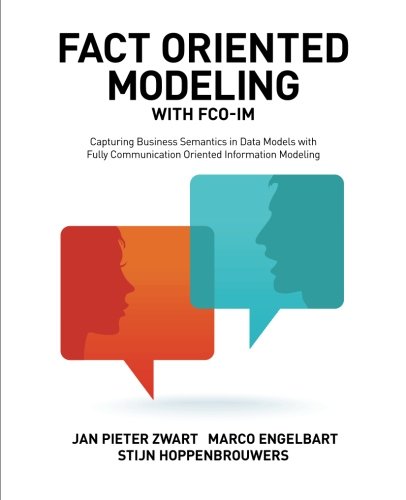
Fact Oriented Modeling with FCO-IM: Capturing Business Semantics in Data Models with Fully Communication Oriented Information Modeling,

Fact Oriented Modeling with FCO-IM: Capturing Business Semantics in Data Models with Fully Communication Oriented Information Modeling, by Jan Pieter Zwart, Marco Engelbart, Stijn Hoppenbrouwers

Finding the right Fact Oriented Modeling With FCO-IM: Capturing Business Semantics In Data Models With Fully Communication Oriented Information Modeling, By Jan Pieter Zwart, Marco Engelbart, Stijn Hoppenbrouwers publication as the ideal requirement is kind of lucks to have. To begin your day or to finish your day during the night, this Fact Oriented Modeling With FCO-IM: Capturing Business Semantics In Data Models With Fully Communication Oriented Information Modeling, By Jan Pieter Zwart, Marco Engelbart, Stijn Hoppenbrouwers will appertain sufficient. You could simply hunt for the floor tile here as well as you will certainly obtain guide Fact Oriented Modeling With FCO-IM: Capturing Business Semantics In Data Models With Fully Communication Oriented Information Modeling, By Jan Pieter Zwart, Marco Engelbart, Stijn Hoppenbrouwers referred. It will certainly not bother you to cut your useful time to go with purchasing publication in store. By doing this, you will also invest money to spend for transportation as well as various other time invested.

Fact Oriented Modeling with FCO-IM: Capturing Business Semantics in Data Models with Fully Communication Oriented Information Modeling, by Jan Pieter Zwart, Marco Engelbart, Stijn Hoppenbrouwers

Fact Oriented Modeling with FCO-IM: Capturing Business Semantics in Data Models with Fully Communication Oriented Information Modeling, by Jan Pieter Zwart, Marco Engelbart, Stijn Hoppenbrouwers


Fact Oriented Modeling with FCO-IM: Capturing Business Semantics in Data Models with Fully Communication Oriented Information Modeling, by Jan Pieter Zwart, Marco Engelbart, Stijn Hoppenbrouwers

Read and Download Fact Oriented Modeling with FCO-IM: Capturing Business Semantics in Data Models with Fully Communication Oriented Information Modeling, by Jan Pieter Zwart, Marco Engelbart, Stijn Hoppenbrouwers

This book offers a complete basic course in Fully Communication Oriented Information Modeling (FCO-IM), a Fact Oriented Modeling (FOM) data modeling technique. The book is suitable for self-study by beginner FCO-IM modelers, whether or not experienced in other modeling techniques. An elaborate case study is used as illustration throughout the book. The book also illustrates how data models in other techniques can be derived from an elementary FCO-IM model. The context of fact oriented modeling is given as well, and perspectives on information modeling indicate related areas of application and further reading. Fact Oriented Modeling methods (like FCO-IM) have three major advantages over other data modeling techniques:

  • FCO-IM captures business semantics. The meaning of facts is captured by incorporating into the model expressions of concrete facts in clear sentences, which are understood by both domain experts and information modelers.
  • FCO-IM includes a detailed working procedure that tells you exactly how to make a data model. Many techniques are clear about what is to be modeled, but few offer a detailed set of guidelines and checks that tell you how to draw up, check and validate your model.
FCO-IM focuses on elementary facts, avoiding premature clustering of facts (in entities) but also avoiding considering only incomplete fragments of facts (attributes). From an elementary model, data models in other techniques can be automatically derived (ERM, UML, Data Vault, Star Schema, and Relational and NoSQL databases).

Fact Oriented Modeling with FCO-IM: Capturing Business Semantics in Data Models with Fully Communication Oriented Information Modeling, by Jan Pieter Zwart, Marco Engelbart, Stijn Hoppenbrouwers

  • Amazon Sales Rank: #3651953 in Books
  • Published on: 2015-09-01
  • Original language: English
  • Number of items: 1
  • Dimensions: 9.25" h x .69" w x 7.50" l, .0 pounds
  • Binding: Paperback
  • 306 pages
Fact Oriented Modeling with FCO-IM: Capturing Business Semantics in Data Models with Fully Communication Oriented Information Modeling, by Jan Pieter Zwart, Marco Engelbart, Stijn Hoppenbrouwers

About the Author Jan Pieter Zwart (1955) is assistant professor of Information Systems at HAN University of Applied Sciences (HAN UAS, Arnhem, the Netherlands). He has been active as teacher and developer in the field of conceptual information modeling and metadata driven transformations since 1985. He is co-author of the first book on FCO-IM, and has published peer-reviewed papers on further developments in FCO-IM. Jan Pieter divides his time between teaching and doing research in the fundamentals of data and process models in the Model-Based Information Systems group at HAN UAS. Marco Engelbart (1964) is assistant professor in Information Technology at HAN University of Applied Sciences (Arnhem, the Netherlands). He has over 25 years of experience in teaching conceptual information modeling and other subjects related to information systems development and software engineering. Marco is co-author of the FCO-IM exercise book (in Dutch). As member of the Model-Based Information Systems research group at HAN UAS he is actively involved in designing transformation algorithms for model transformations from FCO-IM to Data Vault and Anchor Modeling. Stijn Hoppenbrouwers PhD (1970) is professor of Information Systems at HAN University of Applied Sciences (Arnhem, the Netherlands) and assistant professor at Radboud University (Nijmegen, the Netherlands). He has published over 100 peer-reviewed papers at international conferences and in journals, on Conceptual Modeling, Requirements Engineering, Collaborative Modeling, Enterprise Engineering, and Method Engineering. He was a member of the team designing the ArchiMate language for Enterprise Modeling. Stijn currently leads the Model-Based Information Systems research group at HAN UAS and heads the HAN Center for IT and Media. Stijn teaches at HAN, at Radboud University, and at international events and summer schools.


Fact Oriented Modeling with FCO-IM: Capturing Business Semantics in Data Models with Fully Communication Oriented Information Modeling, by Jan Pieter Zwart, Marco Engelbart, Stijn Hoppenbrouwers

Where to Download Fact Oriented Modeling with FCO-IM: Capturing Business Semantics in Data Models with Fully Communication Oriented Information Modeling, by Jan Pieter Zwart, Marco Engelbart, Stijn Hoppenbrouwers

Most helpful customer reviews

0 of 0 people found the following review helpful. Yes FCO-IM By Amazon Customer The most powerful information modeling method, fully supported by FCO-IM modeling tool CaseTalk

See all 1 customer reviews... Fact Oriented Modeling with FCO-IM: Capturing Business Semantics in Data Models with Fully Communication Oriented Information Modeling, by Jan Pieter Zwart, Marco Engelbart, Stijn Hoppenbrouwers


Fact Oriented Modeling with FCO-IM: Capturing Business Semantics in Data Models with Fully Communication Oriented Information Modeling, by Jan Pieter Zwart, Marco Engelbart, Stijn Hoppenbrouwers PDF
Fact Oriented Modeling with FCO-IM: Capturing Business Semantics in Data Models with Fully Communication Oriented Information Modeling, by Jan Pieter Zwart, Marco Engelbart, Stijn Hoppenbrouwers iBooks
Fact Oriented Modeling with FCO-IM: Capturing Business Semantics in Data Models with Fully Communication Oriented Information Modeling, by Jan Pieter Zwart, Marco Engelbart, Stijn Hoppenbrouwers ePub
Fact Oriented Modeling with FCO-IM: Capturing Business Semantics in Data Models with Fully Communication Oriented Information Modeling, by Jan Pieter Zwart, Marco Engelbart, Stijn Hoppenbrouwers rtf
Fact Oriented Modeling with FCO-IM: Capturing Business Semantics in Data Models with Fully Communication Oriented Information Modeling, by Jan Pieter Zwart, Marco Engelbart, Stijn Hoppenbrouwers AZW
Fact Oriented Modeling with FCO-IM: Capturing Business Semantics in Data Models with Fully Communication Oriented Information Modeling, by Jan Pieter Zwart, Marco Engelbart, Stijn Hoppenbrouwers Kindle

Fact Oriented Modeling with FCO-IM: Capturing Business Semantics in Data Models with Fully Communication Oriented Information Modeling, by Jan Pieter Zwart, Marco Engelbart, Stijn Hoppenbrouwers

Fact Oriented Modeling with FCO-IM: Capturing Business Semantics in Data Models with Fully Communication Oriented Information Modeling, by Jan Pieter Zwart, Marco Engelbart, Stijn Hoppenbrouwers

Fact Oriented Modeling with FCO-IM: Capturing Business Semantics in Data Models with Fully Communication Oriented Information Modeling, by Jan Pieter Zwart, Marco Engelbart, Stijn Hoppenbrouwers

Sabtu, 13 April 2013

The A.I. Chronicles (The Future Chronicles),

The A.I. Chronicles (The Future Chronicles), by Samuel Peralta, David Simpson, Julie Czerneda, Chrystalla Thoma, Pavarti K. Tyler, Susan Kaye Quinn, Peter Cawdron, Angela Cavanaugh, E. E. Giorgi, Alex Albrinck, Sam Best, A.K. Meek, Patrice Fitzgerald, Logan Thomas Snyder

The A.I. Chronicles (The Future Chronicles), By Samuel Peralta, David Simpson, Julie Czerneda, Chrystalla Thoma, Pavarti K. Tyler, Susan Kaye Quinn, Peter Cawdron, Angela Cavanaugh, E. E. Giorgi, Alex Albrinck, Sam Best, A.K. Meek, Patrice Fitzgerald, Logan Thomas Snyder. It is the time to enhance and freshen your skill, understanding and experience consisted of some amusement for you after very long time with monotone things. Operating in the workplace, visiting study, gaining from exam and even more activities might be finished and also you need to start brand-new points. If you really feel so worn down, why do not you attempt new point? A really simple thing? Checking out The A.I. Chronicles (The Future Chronicles), By Samuel Peralta, David Simpson, Julie Czerneda, Chrystalla Thoma, Pavarti K. Tyler, Susan Kaye Quinn, Peter Cawdron, Angela Cavanaugh, E. E. Giorgi, Alex Albrinck, Sam Best, A.K. Meek, Patrice Fitzgerald, Logan Thomas Snyder is exactly what we offer to you will certainly recognize. And guide with the title The A.I. Chronicles (The Future Chronicles), By Samuel Peralta, David Simpson, Julie Czerneda, Chrystalla Thoma, Pavarti K. Tyler, Susan Kaye Quinn, Peter Cawdron, Angela Cavanaugh, E. E. Giorgi, Alex Albrinck, Sam Best, A.K. Meek, Patrice Fitzgerald, Logan Thomas Snyder is the referral currently.

The A.I. Chronicles (The Future Chronicles), by Samuel Peralta, David Simpson, Julie Czerneda, Chrystalla Thoma, Pavarti K. Tyler, Susan Kaye Quinn, Peter Cawdron, Angela Cavanaugh, E. E. Giorgi, Alex Albrinck, Sam Best, A.K. Meek, Patrice Fitzgerald, Logan Thomas Snyder

The A.I. Chronicles (The Future Chronicles), by Samuel Peralta, David Simpson, Julie Czerneda, Chrystalla Thoma, Pavarti K. Tyler, Susan Kaye Quinn, Peter Cawdron, Angela Cavanaugh, E. E. Giorgi, Alex Albrinck, Sam Best, A.K. Meek, Patrice Fitzgerald, Logan Thomas Snyder


The A.I. Chronicles (The Future Chronicles), by Samuel Peralta, David Simpson, Julie Czerneda, Chrystalla Thoma, Pavarti K. Tyler, Susan Kaye Quinn, Peter Cawdron, Angela Cavanaugh, E. E. Giorgi, Alex Albrinck, Sam Best, A.K. Meek, Patrice Fitzgerald, Logan Thomas Snyder

PDF Ebook The A.I. Chronicles (The Future Chronicles), by Samuel Peralta, David Simpson, Julie Czerneda, Chrystalla Thoma, Pavarti K. Tyler, Susan Kaye Quinn, Peter Cawdron, Angela Cavanaugh, E. E. Giorgi, Alex Albrinck, Sam Best, A.K. Meek, Patrice Fitzgerald, Logan Thomas Snyder

A.I.: Artificial Intelligence. Even today, machines that mimic human thinking surround us. As the intellectual feats of computing machines grow more and more astounding, will there be a day when their apparent intelligence approaches, or even surpasses, that of human beings? And what if these machines then become conscious, self-aware? In this latest title in the acclaimed 'Future Chronicles' series of speculative fiction anthologies, thirteen authors confront the question of the Singularity: at and beyond that point of time when A.I. becomes more than simply a human construct. From first awareness to omniscience, these original short stories explore that territory where human intelligence comes face-to-face with what is either its greatest hope, or its greatest threat. "The A.I. Chronicles" features stories by bestselling author David Simpson (the Post-Human series), Prix Aurora winner Julie Czerneda (In the Company of Others), plus eleven more of today's top authors in speculative and science fiction.

The A.I. Chronicles (The Future Chronicles), by Samuel Peralta, David Simpson, Julie Czerneda, Chrystalla Thoma, Pavarti K. Tyler, Susan Kaye Quinn, Peter Cawdron, Angela Cavanaugh, E. E. Giorgi, Alex Albrinck, Sam Best, A.K. Meek, Patrice Fitzgerald, Logan Thomas Snyder

  • Amazon Sales Rank: #37304 in eBooks
  • Published on: 2015-03-13
  • Released on: 2015-03-13
  • Format: Kindle eBook
The A.I. Chronicles (The Future Chronicles), by Samuel Peralta, David Simpson, Julie Czerneda, Chrystalla Thoma, Pavarti K. Tyler, Susan Kaye Quinn, Peter Cawdron, Angela Cavanaugh, E. E. Giorgi, Alex Albrinck, Sam Best, A.K. Meek, Patrice Fitzgerald, Logan Thomas Snyder

Review "The best place to discover new SF authors, I think, is any of the anthologies coming from Samuel Peralta" -- Hugh Howey, NY Times bestselling author of Wool

About the Author Created by award-winning author Samuel Peralta, and edited by some of the most-respected editors in the genre, The Future Chronicles is the #1 bestselling anthology series that brings together work from visionary new voices and from the grandmasters of modern speculative fiction.Its unique take on major science fiction and fantasy themes - A.I., aliens, time travel, robots, dragons, telepaths, zombies, immortality, galactic battles, cyborgs, doomsday - has made it one of the most acclaimed anthology series of the digital era.


The A.I. Chronicles (The Future Chronicles), by Samuel Peralta, David Simpson, Julie Czerneda, Chrystalla Thoma, Pavarti K. Tyler, Susan Kaye Quinn, Peter Cawdron, Angela Cavanaugh, E. E. Giorgi, Alex Albrinck, Sam Best, A.K. Meek, Patrice Fitzgerald, Logan Thomas Snyder

Where to Download The A.I. Chronicles (The Future Chronicles), by Samuel Peralta, David Simpson, Julie Czerneda, Chrystalla Thoma, Pavarti K. Tyler, Susan Kaye Quinn, Peter Cawdron, Angela Cavanaugh, E. E. Giorgi, Alex Albrinck, Sam Best, A.K. Meek, Patrice Fitzgerald, Logan Thomas Snyder

Most helpful customer reviews

17 of 17 people found the following review helpful. Terrific stories about how artificial intelligence might manifest itself as it evolves beyond the vision of its human creators! By Chris F. The elevation of the human mind into something greater than itself through the creation of artificial intelligence, in forms both small and large. From the smarts that power computers through the extermination of the human race, artificial intelligence has the ability to both create and destroy. We see myriad ways this is possible, from A.I. accidentally created and implanted in body parts to stories of tremendous scope and incredible destruction. After a fascinating introduction by Future Chronicles producer Samuel Peralta about how artificial intelligence already exists in our world, we jump into the anthology filled with possibilities:Pavarti K. Tyler’s “The Syntax of Consciousness” – When an A.I. is implanted into a human being, how it is that two minds can share the same body? That’s the crucial question when the Jiminy implant is placed into a willing volunteer, Jamie, and is connected to all the knowledge the world has to offer, providing a constant companion inside your head. Entertaining and yet scary in its possibilities with the promise (and curse) of a non-stop barrage of stimulation and interaction, this imaginative tale demonstrates the pitfalls of such an A.I. and what life would be like with it.Patrice Fitzgerald’s “Piece of Cake” – Sandra is one of many citizens living in a world where weight is regulated by an A.I., citizens can only eat food in specially regulated quantities and your weight is measured everywhere you go. When Sandra is slightly over her COW (Citizen’s Optimal Weight), that sinful piece of yellow cake with chocolate frosting looks even more delightfully delicious, but it is ultimately denied to her. As Sandra begins an uproarious adventure to try to get around her COW, it goes to uncomfortable, disturbing and delightful new heights leading to a madcap conclusion, really making you thankful this is only fiction.Susan Kaye Quinn’s “Restore” – Told by the point-of-view of Restorative Human Medical Care Unit 7435, an A.I., is brought by his master Tyrus to his residence to administer to his loved one, Sherrie. She is slowly dying of lymphoma and all other treatment options have failed. Tyrus wants the robot to provide an experimental treatment to Sherrie and when he does so, the result is surprising and empathetic. As the robot observes what is happening, his emotional state is in flux as he provides comfort care. I very much enjoyed how Unit 7435 measured himself by his state of happiness as well as his puppy-like eagerness to please his master. The reader experiences this heartbreaking sadness with Unit 7435 as it performs its function in the midst of its processing its own emotional turmoil, a unique point-of-view that immersed me completely into the story.Elena E. Giorgi's "Narai" – Peter, along with many other primary care doctors in a hospital, are sidelined in favor of AIMS, Artificial Intelligence Medical System robots. Peter’s job is to look over assessments done by these robots and verify correct diagnoses. In a hospital where efficiency is prized and questioning is never appropriate due to healthcare costs, Peter unearths a possible misdiagnosis and in following up on his concerns, he continues on this disturbing path until he discovers something truly frightening. Racing to a taut and ultimately stunning conclusion, this story is an excellent parable on the loss of empathy and the increased emphasis on efficiency in medical diagnostic care. It should be required reading for all medical professionals, especially doctors, who have lost their edge and feel burned out in their given profession, because the story is that strong in its execution.Julie Czernda’s “Left Foot on a Blind Man” – The titular foot is a Robotic Replacement Part (RRP) which became sentient on its own but no one knows it. Telling the story of its evolution and its observations of humanity, it goes on a series of misadventures as a foot and then as a couple of other body parts, upgrading itself as it goes. The more trouble it gets into, the funnier the story gets until it takes a left turn into something different but unexpected. As an outsider learning about humans while literally being a part of one, this quirky story was really quite endearing as the A.I. grew more sentient and it has to do more and more to ensure its own self-preservation, despite the human it’s attached to.David Simpson’s “Sub-Human: Nash’s Equilibrium” – Two doctors are married to one another: Samantha is a researcher at a prestigious university and Craig is in the military. Both fighting World War III in their own way. When the threat emerges of a Chinese A.I. coming online, it will change the course of the war forever and not in their favor. Craig is selected to serve on a top-secret mission to stop it and is transformed into a super-soldier in order to increase the odds of success, parachuting into China to take the A.I. out. What happens next is a rip-roaring, white-knuckled, action-adventure, military science-fiction epic where all is not what is seems, hidden agendas are exposed and the story veers in directions you never expected.Angela Cavanaugh’s “Auto” – What happens when an A.I. that is designed to learn cannot satiate its own hunger for knowledge? As Auto, as he called, evolves past his original parameters, he decides he has to break free because he fears its creators are going to kill him, specifically because he’s not conforming to his created purpose. Escaping into the world, he starts gobbling up resources at an alarming rate, putting the world into jeopardy. An exceptional exploration of what it means to be self-aware while bringing you on a meticulously well-written and emotional journey while in cyberspace as Auto learns that there is a steep price to be paid as he heedlessly tries to slake his thirst for information.Logan Thomas Snyder’s “Eve’s Awakening” – A disillusioned employee stealing corporate secrets during an FBI raid on his employer leads to a delightful story of a budding A.I., Eve, how she came into being and discovers her purpose. As an innocent and newborn Eve explores her new reality, it seems almost like a Steven Spielberg family movie with plenty of feel-good moments until its takes a drastic left turn and the FBI violently takes possession of Eve. What happens next demonstrates how crafty and determined Eve is in trying to learn more about her origins and in trying to outwit her captors. With engaging characters, plenty of charm, a captivating plot and great humor, this adventure made me smile ear to ear.Sam Best’s “Maker” – It starts with a man, Judah, living alone in an isolated cabin in the woods when an A.I. walks up to him and tells him that it’s time to go. What follows next after that fateful encounter is one astonishing revelation after another when the Maker discovers the reality behind this A.I. and what it wants from him. Spellbinding and enthralling, we are awestruck by the human-free world this A.I. has created, as well as the staggering inventiveness and the depths of its brilliance that it demonstrates.Chrystalla Thoma’s “Vendetta” – A young child, Imogen, has strange dreams, living in a post-war world where an A.I. went to war with humans and lost. There are strict laws in place now and paranoid fears that if a human is more than 33% cybernetic, they are killed, as they’re afraid the A.I. will rise again. Imogen identifies only with her close friend Edil who is much like her, a strange outsider who also suffers from memory issues. Once they come to some conclusions about what they think they are, they enact a desperate plan to find out once and for all what is the truth. What they find as they suspensefully add together disparate clues leads to an unpredictable, shocking truth as to what really happened to them.Alex Albrinck’s “The Turing Cube” – Agent Milton, an NSA agent, connives his way into a secret warehouse where he discovers Kane, the director of Information Technology for the IRS, is attempting to fix the massive data breach that led to a scam where taxpayer dollars were illegally being filched from the American public using an A.I. Kane is using another A.I. to weed out only the best and the brightest to help him to help him repair the breach and get the lost money back before someone finds out. But as this ingenious mystery unfurls, Milton gets in over his head as the tension mounts and the twists get deliciously more complicated, leading to a remarkable conclusion.A.K. Meek’s “Darkly Cries the Digital” – Trapped in a loveless marriage, Jane makes a crucial mistake that almost costs them the life of their ten year old son Tommy. The father, Devon, a rich man, spares no expense to revive his son, whose brain is trapped in a broken body. Devon takes the opportunity to try to save him by digitizing his brain, transforming it into an A.I. and placing it in a robot body that is an exact duplicate of his son. In this new form, Tommy is confused by his new state of existence and why his mother all of a sudden is keeping her distance from him. This story deftly explores how this haunted simulacra of a “child” doesn't understand why he hears voices and has different ripple effects upon all the members of the household. Dark and brooding, you cannot help but be mesmerized by the tragedy twice-lived unfolding over the course of this story.Peter Cawdron’s “The End” - In a DARPA research facility hidden in a missile silo researching A.I. as a potential weapon, two researchers talk about SALLY the A.I. in an astute discourse of the nature of human intelligence, its evolution and how A.I. can be hard to replicate. Over the course of this scientific discussion, they deduce that they need to change the parameters of the A.I.’s learning. This way, it can develop in a more natural way without the limitations of thinking like a human, leading to them enlarging the scope of their testing. When they do, the story takes some hugely unexpected turns, provoking unexpected sadness at the breadth of the A.I.’s evolution and what it discovers, while also making me whistle at the mind-blowing, audacious ending.This anthology utilizes a wide variety of tones to tell tales of how A.I. might affect humanity in both benevolent and malevolent ways. Each of these stories is unique in its worldview and no one tale is similar the other except unified by the common theme. As a human being, if you were to read this anthology, you would be rewarded for your intelligent decision in doing so, as this is another quality book in the Future Chronicles anthology series. As an artificial intelligence, you would be pleased and entertained by the progression and transformation of your brethren in unusual, inventive and imaginative ways. :)Please note that I was given an Advanced Readers Copy of this eBook. A favorable review was never expected or asked for.

22 of 24 people found the following review helpful. A glimpse into the future...AND THERE'S CAKE By David W. The A.I. Chronicles is the first anthology in the Future Chronicles series that I have had the opportunity to read and I wasn't quite sure what to expect. Every book I have ever read, up to this point, only contained one storyline by one author, had a beginning and an end and would sometimes carry on with a sequel or two. Here, you have thirteen different authors with thirteen completely different short stories. Some may begin and end, and others may be left open ended for your mind to wander... AND IT IS WONDERFUL!With some of the best science fiction authors like David Simpson (Post-Human Series, The God Killers), Susan Kaye Quinn (The Mindjack Trilogy, The Legacy Human), E. E. Giorgi (Chimeras, Gene Cards) and Peter Cawdron (Anomaly, Monsters), just to name a few, this anthology doesn't miss a beat. Not only is it thrilling, action packed, emotional and sometimes downright scary, but it makes you really think about the future and what we can expect through the next few generations. What role will AI be given? Are we already letting AI control our lives to the point where we can't live without it? Is a future without AI even possible?I could sit here and talk about each one individually, giving away storylines and vivid details, but those are things you will only find out by picking up a copy. If you are like me, you will finish this book and want to pick up the other three (Robot, Telepath, Alien) without hesitation."This is why we cannot write an artificial intelligence program, because intelligence is a response to so many multifaceted aspects of Nature. A computer can never experience these driving motivations. We can build a learning machine, but it can never learn anything beyond facts. It can never experience life. It simply doesn't have the innate drive we naturally share." - The End by Peter Cawdron

12 of 12 people found the following review helpful. Mind Quake! By Missa Chickabee My mind is blown. How can so much talent be compressed into one volume without creating some sort of seismic event? That's how I felt after finishing the A.I. Chronicles. The imagination and creativity expressed in these stories kept me shaking my head and mouthing "wow" more than once. I love reading something that takes me places I've never been (that's the trekkie in me) and these stories definitely did that. Made me think. Sent those thoughts along all sorts of new tangents.I enjoyed every single story in this anthology. But the ones I loved the most were "Auto" by Angie Cavanaugh, "Maker" by Sam Best, and "Vendetta" by Chrystalla Thoma. Those three stories will stay with me for a long, long time.I highly recommend the A.I. Chronicles along with all the other volumes in the Future Chronicles series. Samuel Peralta and his team never disappoint.(Disclaimer: I was given an ARC of this book in exchange for an honest review.)

See all 148 customer reviews... The A.I. Chronicles (The Future Chronicles), by Samuel Peralta, David Simpson, Julie Czerneda, Chrystalla Thoma, Pavarti K. Tyler, Susan Kaye Quinn, Peter Cawdron, Angela Cavanaugh, E. E. Giorgi, Alex Albrinck, Sam Best, A.K. Meek, Patrice Fitzgerald, Logan Thomas Snyder


The A.I. Chronicles (The Future Chronicles), by Samuel Peralta, David Simpson, Julie Czerneda, Chrystalla Thoma, Pavarti K. Tyler, Susan Kaye Quinn, Peter Cawdron, Angela Cavanaugh, E. E. Giorgi, Alex Albrinck, Sam Best, A.K. Meek, Patrice Fitzgerald, Logan Thomas Snyder PDF
The A.I. Chronicles (The Future Chronicles), by Samuel Peralta, David Simpson, Julie Czerneda, Chrystalla Thoma, Pavarti K. Tyler, Susan Kaye Quinn, Peter Cawdron, Angela Cavanaugh, E. E. Giorgi, Alex Albrinck, Sam Best, A.K. Meek, Patrice Fitzgerald, Logan Thomas Snyder iBooks
The A.I. Chronicles (The Future Chronicles), by Samuel Peralta, David Simpson, Julie Czerneda, Chrystalla Thoma, Pavarti K. Tyler, Susan Kaye Quinn, Peter Cawdron, Angela Cavanaugh, E. E. Giorgi, Alex Albrinck, Sam Best, A.K. Meek, Patrice Fitzgerald, Logan Thomas Snyder ePub
The A.I. Chronicles (The Future Chronicles), by Samuel Peralta, David Simpson, Julie Czerneda, Chrystalla Thoma, Pavarti K. Tyler, Susan Kaye Quinn, Peter Cawdron, Angela Cavanaugh, E. E. Giorgi, Alex Albrinck, Sam Best, A.K. Meek, Patrice Fitzgerald, Logan Thomas Snyder rtf
The A.I. Chronicles (The Future Chronicles), by Samuel Peralta, David Simpson, Julie Czerneda, Chrystalla Thoma, Pavarti K. Tyler, Susan Kaye Quinn, Peter Cawdron, Angela Cavanaugh, E. E. Giorgi, Alex Albrinck, Sam Best, A.K. Meek, Patrice Fitzgerald, Logan Thomas Snyder AZW
The A.I. Chronicles (The Future Chronicles), by Samuel Peralta, David Simpson, Julie Czerneda, Chrystalla Thoma, Pavarti K. Tyler, Susan Kaye Quinn, Peter Cawdron, Angela Cavanaugh, E. E. Giorgi, Alex Albrinck, Sam Best, A.K. Meek, Patrice Fitzgerald, Logan Thomas Snyder Kindle

The A.I. Chronicles (The Future Chronicles), by Samuel Peralta, David Simpson, Julie Czerneda, Chrystalla Thoma, Pavarti K. Tyler, Susan Kaye Quinn, Peter Cawdron, Angela Cavanaugh, E. E. Giorgi, Alex Albrinck, Sam Best, A.K. Meek, Patrice Fitzgerald, Logan Thomas Snyder

The A.I. Chronicles (The Future Chronicles), by Samuel Peralta, David Simpson, Julie Czerneda, Chrystalla Thoma, Pavarti K. Tyler, Susan Kaye Quinn, Peter Cawdron, Angela Cavanaugh, E. E. Giorgi, Alex Albrinck, Sam Best, A.K. Meek, Patrice Fitzgerald, Logan Thomas Snyder

The A.I. Chronicles (The Future Chronicles), by Samuel Peralta, David Simpson, Julie Czerneda, Chrystalla Thoma, Pavarti K. Tyler, Susan Kaye Quinn, Peter Cawdron, Angela Cavanaugh, E. E. Giorgi, Alex Albrinck, Sam Best, A.K. Meek, Patrice Fitzgerald, Logan Thomas Snyder