The Invisible Man (Xist Classics), by H.G. Wells
But, exactly what's your matter not as well enjoyed reading The Invisible Man (Xist Classics), By H.G. Wells It is a wonderful task that will certainly consistently provide wonderful benefits. Why you end up being so odd of it? Many things can be reasonable why individuals don't like to read The Invisible Man (Xist Classics), By H.G. Wells It can be the monotonous activities, guide The Invisible Man (Xist Classics), By H.G. Wells compilations to read, even lazy to bring spaces almost everywhere. Now, for this The Invisible Man (Xist Classics), By H.G. Wells, you will start to like reading. Why? Do you recognize why? Read this web page by finished.
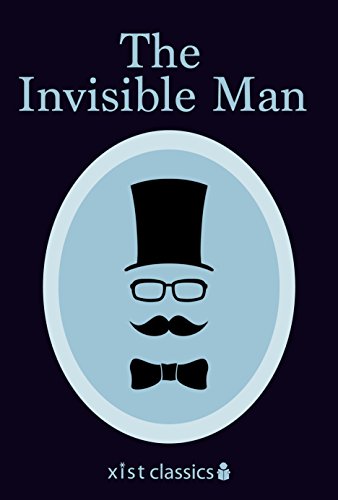
The Invisible Man (Xist Classics), by H.G. Wells

Download Ebook PDF Online The Invisible Man (Xist Classics), by H.G. Wells
The Invisible Man is a science fiction novella by H.G. Wells. In the story, Griffin is a scientist who has developed the process to make a person invisible. He tests it out on himself, only to find that he cannot reverse the process. This Xist Classics edition has been professionally formatted for e-readers with a linked table of contents. This ebook also contains a bonus book club leadership guide and discussion questions. We hope you’ll share this book with your friends, neighbors and colleagues and can’t wait to hear what you have to say about it.
Xist Publishing is a digital-first publisher. Xist Publishing creates books for the touchscreen generation and is dedicated to helping everyone develop a lifetime love of reading, no matter what form it takes
- Get your next Xist Classic title for Kindle here: http://amzn.to/1A7cKKl
- Find all our our books for Kindle here: http://amzn.to/1PooxLl
- Sign up for the Xist Publishing Newsletter here.
Find more great titles on our website.
The Invisible Man (Xist Classics), by H.G. Wells- Amazon Sales Rank: #433417 in eBooks
- Published on: 2015-03-30
- Released on: 2015-03-30
- Format: Kindle eBook
Amazon.com Review We rely, in this world, on the visual aspects of humanity as a means of learning who we are. This, Ralph Ellison argues convincingly, is a dangerous habit. A classic from the moment it first appeared in 1952, Invisible Man chronicles the travels of its narrator, a young, nameless black man, as he moves through the hellish levels of American intolerance and cultural blindness. Searching for a context in which to know himself, he exists in a very peculiar state. "I am an invisible man," he says in his prologue. "When they approach me they see only my surroundings, themselves, or figments of their imagination--indeed, everything and anything except me." But this is hard-won self-knowledge, earned over the course of many years.
As the book gets started, the narrator is expelled from his Southern Negro college for inadvertently showing a white trustee the reality of black life in the south, including an incestuous farmer and a rural whorehouse. The college director chastises him: "Why, the dumbest black bastard in the cotton patch knows that the only way to please a white man is to tell him a lie! What kind of an education are you getting around here?" Mystified, the narrator moves north to New York City, where the truth, at least as he perceives it, is dealt another blow when he learns that his former headmaster's recommendation letters are, in fact, letters of condemnation.
What ensues is a search for what truth actually is, which proves to be supremely elusive. The narrator becomes a spokesman for a mixed-race band of social activists called "The Brotherhood" and believes he is fighting for equality. Once again, he realizes he's been duped into believing what he thought was the truth, when in fact it is only another variation. Of the Brothers, he eventually discerns: "They were blind, bat blind, moving only by the echoed sounds of their voices. And because they were blind they would destroy themselves.... Here I thought they accepted me because they felt that color made no difference, when in reality it made no difference because they didn't see either color or men."
Invisible Man is certainly a book about race in America, and sadly enough, few of the problems it chronicles have disappeared even now. But Ellison's first novel transcends such a narrow definition. It's also a book about the human race stumbling down the path to identity, challenged and successful to varying degrees. None of us can ever be sure of the truth beyond ourselves, and possibly not even there. The world is a tricky place, and no one knows this better than the invisible man, who leaves us with these chilling, provocative words: "And it is this which frightens me: Who knows but that, on the lower frequencies, I speak for you?" --Melanie Rehak
From Publishers Weekly These three volumes have been redesigned and reissued to commemorate the first anniversary of Ellison's death. Copyright 1995 Reed Business Information, Inc.
From Library Journal Two of Wells's masterpieces get the red-carpet treatment here in these luxurious editions. Along with annotated texts, they feature scholarly introductions and appendixes, bibliographies, illustrations, and indexes. Though they are perhaps a tad pricey for most public libraries, academic collections supporting English departments should definitely invest in these volumes.Copyright 1998 Reed Business Information, Inc.

Where to Download The Invisible Man (Xist Classics), by H.G. Wells
Most helpful customer reviews
102 of 114 people found the following review helpful. Extremely Influential, Extremely Memorable By Gary F. Taylor On the surface, THE INVISIBLE MAN concerns a scientist named Griffin who has discovered the means to invisibility--but who has gone mad in the process. When frustrated in his efforts to restore himself to visibility, he determines to embark upon a reign of terror that will make him master of the world. It is worth noting, however, that Wells was very much a social writer and that his novels are inevitably commentaries on various social evils. Once you scratch the surface of THE INVISIBLE MAN you will find that it is very much a parable of class structure that dominated British life during the Victorian age: there are many "invisible men;" this particular one, however, is in a very literal situation.And it is the literal situation from which the novel draws most of its power. Invisibility sounds attractive--but what if you were to actually become so? How would you cope with the ordinary details of every day life? Griffin does not cope well at all, and although Wells suggests that his madness have arisen from a number of sources, he also implies that it may arise from the fact of invisibility itself, again twisting the context back into the social criticism on which the novel seems based.First published in 1897, THE INVISIBLE MAN is one of Wells earliest novels, and for all its charms it creaks a bit in terms of plot and structure. Some may disagree, but to my mind the most effective portion of the novel are the chapters in which Griffin relates his adventures to fellow scientist Kemp--but regardless of its flaws remains extremely influential and it has tremendous dash and style throughout. Short enough to be read in a single sitting, it is a quick and entertaining read and it is also quite witty in an underhanded, subversive sort of way. Extremely memorable!GFT, Amazon Reviewer
36 of 39 people found the following review helpful. Still interesting By TS First, this edition: it's reasonably well-formatted for a free ebook, with few typos, although the table of contents is not clickable; it clocks in at 1,841 "locations."As to the story itself:This is H.G. Wells' foundational science-fiction tale of a mad scientist who discovers a way to turn himself invisible. It's a masterfully told story that's been entertaining readers for roughly a hundred years, and I'd lay good odds you'll find it well worth the read.What many readers might miss, though (I certainly did, my first time through) is that this isn't just a sci-fi potboiler; it's a modernization of the Platonic story of the Ring of Gyges. Beyond being a master storyteller, Wells was also an ardent philosopher and socialist, and like all of his other tales, there's a major political point here -- that morality derives from society -- and some additional minor political themes, like the plight of the urban poor.Wells' genius here was to take the Platonic story of a Ring of Invisibility that inevitably led its wearer to commit injustice, and revitalize it in a modern context and in a way that made a sophisticated philosophical point.Where Plato's Glaucon states:--------"For all men believe in their hearts that injustice is far more profitable to the individual than justice, and he who argues as I have been supposing, will say that they are right. If you could imagine any one obtaining this power of becoming invisible, and never doing any wrong or touching what was another's, he would be thought by the lookers-on to be a most wretched idiot, although they would praise him to one another's faces, and keep up appearances with one another from a fear that they too might suffer injustice."--------Wells extrapolates to the present, not only making the story amenable to modern readers by substituting a scientific process for a magic ring, but also by building on Plato's point: not only does Wells' protagonist commit selfish injustice after selfish injustice, but his self-severance from society drives him into a murderous megalomania, and his end is quite the inverse of Plato's Gyges (who ended up king of Lydia and, supposedly, an ancestor of Croesus).
18 of 18 people found the following review helpful. vivid, suspenseful, and good sci-fi By Robert J. Crawford This is a absolutely wonderful book that can be read quickly, maybe even in one sitting. It is told in the first person by an observer who knows the invisible man and is appalled by the transformation that is taking place as both drugs and power corrupt his acquaintence's mind.What is so fun about this book is the pace: you really feel like you are there. It is all realistically imagined, down to the slowness of the undigested food that can still be seen in the invisible's man stomach. This makes the book far better sci-fi than the films, with the possible exception of the one with Claude Rains, which is the best one and the closest to the original novel by far.In addition to Mary SHelley and Jules Verne, Wells helped to set the standard for all hard sci-fi that followed. Thus, if you like sci-fi as literature, this is a MUST read. But if you want a really fun read, this is also good for that.Warmly recommended.
See all 561 customer reviews... The Invisible Man (Xist Classics), by H.G. WellsThe Invisible Man (Xist Classics), by H.G. Wells PDF
The Invisible Man (Xist Classics), by H.G. Wells iBooks
The Invisible Man (Xist Classics), by H.G. Wells ePub
The Invisible Man (Xist Classics), by H.G. Wells rtf
The Invisible Man (Xist Classics), by H.G. Wells AZW
The Invisible Man (Xist Classics), by H.G. Wells Kindle

Tidak ada komentar:
Posting Komentar