The Man with the Compound Eyes: A Novel, by Wu Ming-Yi
Maintain your method to be right here and also read this page completed. You could enjoy browsing guide The Man With The Compound Eyes: A Novel, By Wu Ming-Yi that you really describe get. Here, getting the soft documents of guide The Man With The Compound Eyes: A Novel, By Wu Ming-Yi can be done conveniently by downloading in the link web page that we give here. Certainly, the The Man With The Compound Eyes: A Novel, By Wu Ming-Yi will be your own quicker. It's no should wait for the book The Man With The Compound Eyes: A Novel, By Wu Ming-Yi to obtain some days later after buying. It's no should go outside under the heats up at mid day to visit the book store.
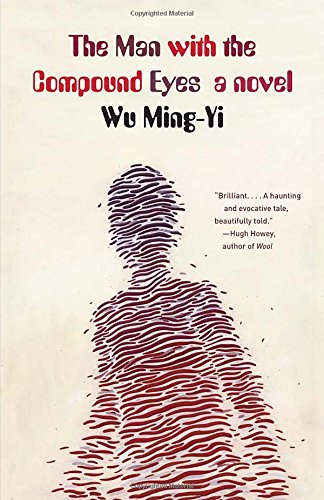
The Man with the Compound Eyes: A Novel, by Wu Ming-Yi

Download PDF Ebook Online The Man with the Compound Eyes: A Novel, by Wu Ming-Yi
When a tsunami sends a massive island made of trash crashing into the coast of Taiwan, two very different people—an outcast from a mythical country and a woman on the verge of suicide—are united in ways they never could have imagined. Intertwined with the story of their burgeoning friendship are the lives of others affected by the tsunami, from environmentalists to Taiwan’s indigenous peoples—and, of course, the mysterious man with the compound eyes. A work of lyrical beauty that combines fantasy, reality, and dystopian environmental saga, here is the English-language debut of a new and exciting award-winning voice from Taiwan.
The Man with the Compound Eyes: A Novel, by Wu Ming-Yi- Amazon Sales Rank: #923386 in Books
- Brand: Ming-yi, Wu/ Sterk, Darryl (TRN)
- Published on: 2015-03-03
- Released on: 2015-03-03
- Original language: English
- Number of items: 1
- Dimensions: 7.99" h x .62" w x 5.18" l, .81 pounds
- Binding: Paperback
- 304 pages
From Booklist Although Taiwanese author Wu has been widely celebrated by Chinese readers for his earlier books, his latest is the first to receive an English translation. In a uniquely harmonious blend of fantasy and blunt realism,Wu’s novel tells the story of two very different protagonists, one from the imaginary island, Wayo-Wayo, and one from coastal Taiwan, whose fates improbably intertwine. As the second son in a culture that worships the Sea God, Atile’i is cast into the Pacific Ocean as a sacrifice once he passes his 180th full moon. Although he is close to drowning, Atile’i’s life is spared when he washes up on an enormous floating mound of trash. Meanwhile, in Taiwan, a literature professor named Alice is preparing to commit suicide following the disappearance of her husband and son. When the trash islet collides with Taiwan, destroying her home, Alice’s plans are set aside, and meeting Atile’i gives her new hope to solve the mystery of her lost family. Wu’s beautifully evocative language and multilayered ecological and cultural themes offer a richly satisfying reading experience. --Carl Hays
Review
“Brilliant. . . . A haunting and evocative tale, beautifully told.” —Hugh Howey, author of Wool“We haven’t read anything like this novel. Ever. South America gave us magical realism—what is Taiwan giving us? A new way of telling our new reality, beautiful, entertaining, frightening, preposterous, true. . . . Wu Ming-Yi treats human vulnerability and the world’s vulnerability with fearless tenderness.” —Ursula K. Le Guin“A striking book. . . . It is science fiction . . . in the way that the best Margaret Atwood books are science fiction. . . . I couldn’t put it down.” —Jason Sheehan, NPR “Lyrical, haunting. . . . A heady mix of science fiction, fantasy, environmental fable and magical realism, the author had to create a genre entirely new for this singular, captivating book.” —Pittsburgh Post-Gazette“Astonishing. . . . A wonderful novel.” —The Independent (London) “An earnest, politically conscious novel, anchored in ecological concerns and Taiwanese identity. . . . Beyond the book’s ecological and scientific attributes, you can see a deft novelist’s hand at work.” —Tash Aw, The Guardian (London) “Imaginative and moving.” —Financial Times “[Ming-Yi is] reminiscent of Haruki Murakami, twisting the dreamlike into the curiously credible.” —Times Literary Supplement (London) “Rich, dense and dripping with life. The book sings in the key of fable, but with the timbre of reality.” —Charles Yu, author of How to Live Safely in a Fictional Universe “An entrancing, multi-faceted elegy. . . . [Ming-Yi writes with] a poet’s approach. . . . Full of painful, wonderful beauty.” —The Rumpus “Beautifully written and beautifully translated. . . . [Ming-Yi] guides us to see the entirety of experience as bumping flotsam in an unending ocean of life colliding and making a mess of things or making something new. . . . Lyric, simple, soft, the story crests and recedes and comes back again.” —The Bloomington Sun-Current “[Ming-Yi’s] rollercoaster of a story is about wilderness, wildness, wonderment, love. . . . [The Man with the Compound Eyes includes] perhaps the best writing to ever come out of a Taiwan novel.” —Taipei Times “A gift. . . . Ming-Yi is a naturalist as well as a storyteller, and it is perhaps his greatest achievement that this novel creates a sense of solidarity not only between his human characters, but also between [the] humans and the animals and plants he describes with such fidelity.” —FullStop “Offering a heady dose of realism, surrealism, and magic realism, with several shots of allegory, award-winning Chinese author Wu [Ming-Yi] offers a work for ‘literary fiction’ readers, but not in the snobbish sense. It’s really for any curious, intelligent reader.” —Library Journal (starred review)
About the Author
Wu Ming-Yi was born in 1971 in Taiwan, where he still lives. A writer, artist, professor, and environmental activist, he has been teaching literature and creative writing at National Dong Hwa University since 2000 and is now a professor in the Department of Chinese. Wu is the author of two books of nature writing, the second of which, The Way of Butterflies, was awarded the China Times Open Book Award in 2003. His debut novel, Routes in the Dream, was named one of the ten best Chinese-language novels of the year by Asian Weekly magazine. The Man with the Compound Eyes is his first book to be translated into English.

Where to Download The Man with the Compound Eyes: A Novel, by Wu Ming-Yi
Most helpful customer reviews
10 of 10 people found the following review helpful. Odd Odyssey By Addison Dewitt Wu Ming-Yi's "The Man with the Compound Eyes" is one of the strangest books I've read in a while. Other reviews here talk about the lengthy eco-concerns but they didn't bother me as much as the style, the story line and other parts which did not add up and made the novel confusing. In general, this book left me with a feeling of "Huh?".For me, there are three parts to making a good read: 1. Story, 2. Characters, 3. StyleMing-Yi's story is, from a distance, not bad. An island is nearly laid to waste by a tsunami of trash. Various people are affected by this unnatural occurrence, including civilized folk along with various native people along a scale of civilization ranging from completely aboriginal to islander to white outsiders. A woman's son and husband go missing and are found dead. A native boy shows up (on a wave of trash) to take their place, somehow embodying them both for the woman while she recovers from the mourning process. Some outsiders show up to investigate the disaster and provide, perhaps, a different perspective on the events taking place. An odd spirit (compound eye man) hovers about the scene of the dead man and little boy, providing yet another strange and seemingly unnecessary viewpoint. The story almost gets to an apex, but fails to do so and then somewhat meanders to a very weak finish, filled with treacly emotive inner dialogues and poetry.Ahem.The characters are interesting, the protagonist is Alice, an Asian woman who loses her son and Norwegian husband, Thom, from a hiking accident. There's Atile'i, the native boy who accidentally floats toward and lands on the island via the trash vortex. Hafay, the coffee house/bar owner who seems to be the most solid character of all. Dahu, an island man whose wife abandon him and who has the hots for Alice. And then, there's yet two more, completely useless characters who add nothing to the story, Detlef and Sara, two eco-investigator types, outsiders who have come to the island to see what's happening. A few other minor characters fill in the blanks, and there's a lot of blanks. The last two characters above (and their back-story) are totally not necessary to the book at all. Filler at best.The style is readable but slow and meandering. Almost all the characters are inside of their heads far too much. Inner dialogue is a constant. This book is riddled with flashbacks, something I'm never fond of and seems to be a irritatingly growing trend among novelists these days. There are many side tracks which deflect story and definitely do not help it move forward. Far too much singing and poetry that don't help the story at all. The one thing that Ming-Yi does well is descriptive prose, so he's got that going for him. And he does a good job of rendering a woman's thoughts realistically. However, this book is very difficult to get through and ends so weakly that this reader felt like there was no point to it. Seriously, I turned the last page and went "Meh" and tossed the book to the floor. I'd like to say that rarely happens, but it seems to be on the increase these days.The book's title and the character from which it was derived are misleading and strange. It's as if Ming-Yi wants to eventually write sci-fi and thought it would be fun to throw in some kind of ghostly, insect-like man to visit his thoughts upon us while we're trying to decipher the rest of this tangled mess of a story. That addition is wholly unnecessary and a major distraction. It is also inserted in such a minor way that I can't figure out how it became the title! Just plain odd.This is one of those books that has a few redeeming qualities that kept me afloat in a sea of trash. Perhaps that's the metaphor Ming-Yi is working toward, but this novel needs a major re-write and clean-up. I've read elsewhere that Ming-Yi is an environmentalist. Perhaps he can start his clean-up efforts with this manuscript. Three stars. Two taken away for meandering story line and over-treacly ending. I give it a weak recommendation at best.
8 of 8 people found the following review helpful. Where worlds collide By KnC Books "No other creature can share experience like this. Only human beings can, through writing, experience something separately together." - The Man with the Compound EyesMost of us lead what we consider simple lives. We look at the mundane activites of daily life - eating, sleeping, working - without consideration of how they affect, or are affected, by the world around us. Indeed, our quest for individuality seems to demand that we see ourselves as separate, living at the center our own little world."The Man with the Compound Eyes" is a novel of interconnectedness; where people, places, things, and even time periods come together, and "the finest movement of any organism represents a change in an ecosystem." Author Wu Ming-Yi takes us to a place where our mythic past of oral legends and wrathful gods meets our technological present of live news coverage and cell phones. There, on a beach in Taiwan, they must confront not only each other but the uncertain future as well, when the rising ocean dumps back all the trash people had dumped into it.As if we have compound eyes, Wu Ming-YI allows us to see a single series of events from multiple perspectives; each intimately personal, yet remaining interrelated. Woven together with the threads of life, death, love, and loss, the characters in "The Man with the Compound Eyes" face their shared trials and individual travails. "Life doesn't allow you any preconceptions. Most of the time you have to accept what life throws at you, kind of like walking into a restaurant where the owner dictates what you're having for dinner."Lyrical, mystical, yet ultimately real, "The Man with the Compound Eyes" is a subtly layered novel that shows us an intricate and multi-faceted world - the world we just happen to live in. An enjoyable read; the translation by Darryl Sterk is seamless. A welcome addition to my library, and highly recommended.
5 of 5 people found the following review helpful. Realism and Myths Combined By asiana Mystical and magical stories are intertwined in this book which took a lot of patience on my part to finish. First of all, the translation is really fine, but the author dwells too much on environmental issues taking away from character development. In this novel two main characters emerge, Atile'i,, a second son who, according to the rules of the mystical island where he lives, has to be sacrificed to the sea. But, instead of dying, he is washed ashore on an island of trash which, after many storms is headed toward a portion of Taiwan meets where he meets the second main character, Alice, a college professor, who is contemplating suicide after the mysterious disappearance of her husband and son during a hiking trip. Environmentalists from all over the world, a mysterious man, friends of Alice all have their stories told in this myriad tale, but it was a chore to finish the book.
See all 37 customer reviews... The Man with the Compound Eyes: A Novel, by Wu Ming-YiThe Man with the Compound Eyes: A Novel, by Wu Ming-Yi PDF
The Man with the Compound Eyes: A Novel, by Wu Ming-Yi iBooks
The Man with the Compound Eyes: A Novel, by Wu Ming-Yi ePub
The Man with the Compound Eyes: A Novel, by Wu Ming-Yi rtf
The Man with the Compound Eyes: A Novel, by Wu Ming-Yi AZW
The Man with the Compound Eyes: A Novel, by Wu Ming-Yi Kindle

Tidak ada komentar:
Posting Komentar